

Are you tired of getting stuck in traffic every time you head out in Miami? You’re not alone. Understanding when rush hour hits can make a big difference in your daily commute. Miami experiences notable traffic congestion during peak times, especially in the mornings and evenings. Knowing when to avoid the roads can save you time and frustration.
Traffic patterns in Miami are influenced by a mix of local events and tourism, especially on weekends. If you want to direct the city more efficiently, it helps to know a bit about the major routes and how traffic flows. Curious about the best times to travel and how to outsmart the gridlock? Let’s dive deeper!
When Is Rush Hour in Miami? Peak Traffic Times Explained

Understanding Rush Hour in Miami: Key Times and Traffic Insights
Miami’s rush hour is characterized by a distinct dual-peak pattern. On weekdays, the morning rush typically occurs between 7:00 a.m. and 9:30 a.m., while the evening peak runs from 4:00 p.m. to 7:00 p.m.
During the morning, average travel speeds drop to around 30.1 km/h, with congestion levels reaching approximately 65.4%. In the evening, the situation becomes more challenging, as speeds can fall to 25.3 km/h, leading to average travel times of about 23 minutes and 43 seconds.
The most congested routes during these periods include major thoroughfares like I-95 and US-1. If you’re planning to drive during rush hour in Miami, it’s advisable to allow for extra travel time, especially if your route includes these key highways.
On weekends, traffic patterns change significantly. Congestion tends to start building on Friday afternoons and can persist through Sunday night.
This increase in traffic is often driven by tourism and local events, so it’s essential to factor in additional time for your travels during this period as well.
By understanding these traffic trends, you can better direct Miami’s roadways and minimize delays.
Whether you’re commuting for work or heading out for leisure, being aware of rush hour times will help you plan your trips more effectively.
Rush Hour on I-95, US-1, and the Dolphin Expressway
Directing Miami’s major transportation corridors, such as I-95, US-1, and the Dolphin Expressway, requires an understanding of their traffic patterns to make your commute smoother.
On I-95, expect significant delays southbound between 7 a.m. and 9 a.m., while northbound traffic tends to slow down from 3 p.m. to 7:30 p.m.
If you’re using US-1, you’ll find the opposite pattern: northbound congestion peaks from 6:30 a.m. to 9:30 a.m., and southbound traffic is heaviest from 3 p.m. to 7:30 p.m., especially due to ongoing construction work.
The Dolphin Expressway sees heavy eastbound traffic from 7 a.m. to 9:30 a.m., creating bottlenecks for those heading into the city.
It’s important to factor in these peak times when planning your trips.
During weekends, traffic volumes increase across all three corridors, particularly for those traveling to the Florida Keys or attending events in the city.
To guide these challenging conditions, consider using real-time navigation apps.
These tools can provide updates on traffic conditions and suggest alternative routes, helping you avoid congestion and save time.
Understanding these patterns and influencing technology will improve your travel experience in Miami.
How to Avoid Miami Rush Hour Traffic
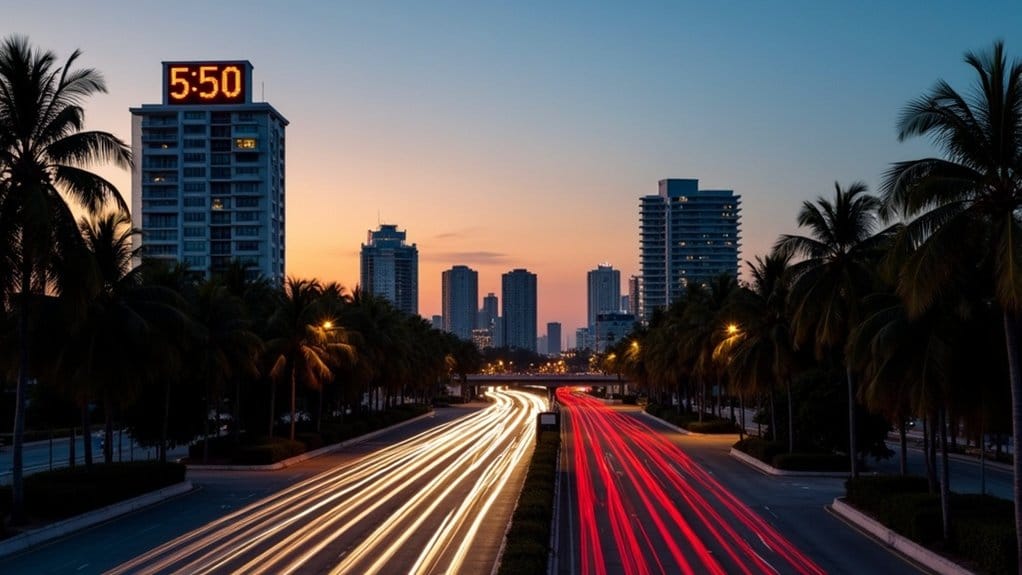
How to Avoid Miami Rush Hour Traffic
Directing Miami’s busy roadways can be challenging, especially during peak traffic hours. To effectively manage your commute, it’s essential to plan ahead rather than reacting to traffic as it happens.
Here are some practical strategies to help you avoid congestion on I-95 and US-1 during the busiest times, typically from 7 a.m. to 9 a.m. and 4 p.m. to 7 p.m.
- Adjust Your Departure Times: If possible, leave before 7 a.m. or wait until after 7 p.m. This simple change can help you steer clear of the heaviest traffic altogether.
- Use Real-Time Navigation Apps: Tools like Waze or Google Maps can provide up-to-the-minute traffic updates. These apps can recalibrate your route based on current conditions, helping you find the quickest way to your destination.
- Consider Alternative Routes: Sometimes, taking less-traveled back roads can save you time, even if they add a bit of distance. Real-time navigation can help you identify when these routes are more efficient than major highways.
- Check Traffic Updates Before You Leave: Monitoring local traffic feeds helps you stay informed about accidents or road closures. This information allows you to plan your trip more effectively and avoid unexpected delays.
By implementing these strategies, you can transform your daily commute in Miami from a stressful experience into a more manageable one.
Planning ahead and using available tools can significantly reduce travel time and improve your overall experience on the road.