
Are you curious about what makes Miami so special? This vibrant city is known for more than just its beautiful beaches and lively nightlife. Its nicknames tell a story about its evolution and cultural diversity, reflecting the essence of the community that thrives there. Each nickname highlights a unique aspect of Miami, from its rapid growth in the late 19th century to its role as a hub for Latin American culture. So, what are these intriguing nicknames, and what do they reveal about this bustling metropolis? Let’s dive in and check out the layers of identity that make Miami truly one-of-a-kind.
The Magic City: Miami’s Most Famous Nickname
Miami is widely known by its nickname, “The Magic City,” which originated in the early 20th century. This moniker emerged as the city rapidly transformed from a frontier outpost plagued by mosquitoes into a bustling urban center. The catalyst for this remarkable change was the extension of Henry Flagler’s Florida East Coast Railway in 1896, which initiated a wave of unprecedented development.
The rapid growth of Miami during this period led to the description of it as a “Magic Metropolis.” Buildings seemed to rise overnight, and infrastructure expanded at an impressive rate. This nickname encapsulates Miami’s ongoing evolution as a city that continuously attracts people from around the world seeking new opportunities.
The term “Magic City” also reflects the optimism surrounding Miami’s development and the tangible progress that has shaped its identity.
Today, Miami’s neighborhoods are in a constant state of evolution, reinforcing the city’s legacy of transformation. This dynamic nature of the city is evident in its diverse communities, cultural events, and urban projects.
Historical Origins: How Miami Earned Its Magical Reputation
The transformation of Miami from a mosquito-infested wilderness to a bustling metropolis in less than a decade can be traced back to its incorporation in 1896. This pivotal moment coincided with the extension of the Florida East Coast Railway, which played a crucial role in facilitating urban development and drawing residents and businesses to the area. The rapid growth of the settlement led to Miami being dubbed the “Magic City,” a nod to its swift evolution.
Several key factors contributed to Miami’s remarkable reputation:
- Henry Flagler’s Railway Extension: The arrival of the railway in Miami opened up new avenues for commerce and improved accessibility, making the city more attractive to businesses and settlers alike.
- Strategic Coastal Location: Miami’s position along the coast made it an appealing destination for developers and investors. Its proximity to the ocean provided not only economic opportunities but also a desirable environment for living and tourism.
- Year-Round Tropical Climate: The area’s warm climate attracted individuals seeking a better quality of life and new opportunities, particularly those looking to escape harsher winters in other parts of the country.
- Rapid Construction: The pace of construction in Miami was unprecedented, with new buildings and infrastructure appearing seemingly overnight. This rapid change not only transformed the landscape but also contributed to the perception of Miami as a city of opportunity.
The transformation of Miami was more than just physical; it embodied the pioneering spirit of America during that era. By 1930, the city’s skyline was a testament to its ongoing evolution, symbolizing its ability to reinvent itself and attract those in search of fresh starts.
This continuous development has played a significant role in shaping Miami’s identity as a vibrant city where possibilities seem to emerge with remarkable speed.
Understanding how Miami earned its “Magic City” title offers valuable insights into the factors that drive urban growth and transformation. The city’s history reflects broader trends in American development and showcases the impact of infrastructure, climate, and economic opportunity on urbanization.
The Capital of Latin America: A Cultural Identity
Miami is often referred to as the “Capital of Latin America,” a title that signifies the city’s deep cultural connections and significant demographic shifts. According to the 2020 census, over 70% of Miami’s population identifies as Hispanic or Latino, making this group a clear cultural majority. This demographic landscape isn’t just a statistic; it shapes Miami’s identity and influences various aspects of life in the city.
The designation as the “Capital of Latin America” reflects Miami’s role as a crucial hub for trade, travel, and cultural exchange between the United States and Latin America. The city’s economy thrives on this relationship, serving as a primary gateway for commerce and tourism in the region.
Businesses in Miami often cater to a diverse clientele, incorporating Latin American influences into their products and services. This economic fusion is evident in the vibrant neighborhoods, restaurants, and markets that celebrate Latin American heritage.
Additionally, Miami’s cultural identity is deeply ingrained in its governmental and social institutions. The presence of expatriate communities strengthens a unique environment where individuals can maintain strong ties to their homelands while actively participating in the local community.
This blend of cultures contributes to a rich urban tapestry that’s distinctly Miami.
Gateway to the Americas: Miami’s Strategic Position
Miami earns the title of the “Gateway to the Americas” due to its prime geographic location, which links the United States with Latin America and the Caribbean.
PortMiami plays a vital role in this connection, handling billions of dollars in trade each year between North and South American markets. This has led to Miami becoming a significant hub for international trade, where various partnerships and business agreements are formed across continents.
As we analyze further, it’s interesting to see how this strategic position not only encourages economic ties but also influences the cultural dynamics in the region.
Major International Trade Hub
Miami serves as a major international trade hub, and its trade dominance can be attributed to several key factors:
- Busiest Cruise Port: Miami is recognized as the world’s busiest cruise port in terms of passenger traffic. This position not only boosts tourism but also boosts the city’s reputation as a vital gateway for international trade.
- Gateway to the Americas: The city acts as the primary U.S. gateway to Caribbean and Latin American markets. This connection facilitates trade and commerce, making it easier for businesses to access these growing markets.
- Strategic Location: Miami’s geographical positioning between North America and South America provides a strategic advantage. This location makes it an ideal transit point for goods traveling between continents, promoteing efficient shipping and logistics operations.
- Cultural and Economic Ties: The diverse cultural landscape of Miami attracts global businesses and investors. Its multicultural environment promotes collaboration and innovation, further solidifying its status as a trade hub.
Overall, Miami’s blend of strategic location, robust infrastructure, and strong cultural connections creates a unique environment for trade and economic growth.
This combination not only benefits local businesses but also improves the city’s role on the global stage.
Bridge Between Two Continents
Miami serves as a vital link between North and South America due to its unique geographic location. This positioning allows the city to act as a central hub for trade and cultural interactions, increasing its economic significance across the Americas. For instance, PortMiami is recognized as the busiest cruise port in the world, facilitating not only leisure travel but also connecting U.S. markets with key partners in the Caribbean and Latin America.
| Connectivity Aspect | Function | Impact |
|---|---|---|
| Geographic Location | Serves as a gateway | Increases trade between nations |
| Cultural Demographics | Diverse Latin American community | Encourages strong regional connections |
| Maritime Infrastructure | Robust port operations | Bolsters economic growth in the region |
| Business Networks | Forming cross-continental alliances | Attracts international businesses |
Miami’s diverse population plays a crucial role in its identity as the “Capital of Latin America.” This demographic richness not only strengthens relationships between the continents but also creates opportunities for residents and businesses alike. The city’s strategic advantages contribute to its reputation as an essential player in global commerce and cultural exchange.
The 305: Area Code as Cultural Symbol
Since its assignment to Miami-Dade County in 1947, the 305 area code has transformed into a significant cultural identifier for the region. While new area codes have been introduced over the years, “The 305” continues to represent Miami’s unique local identity and cultural pride.
The influence of the 305 area code can be observed in various sectors:
- Music Industry: Many artists from Miami incorporate “The 305” into their lyrics and album titles, reflecting the area’s musical heritage and vibrant scene.
- Business Branding: Local businesses often use the 305 area code in their branding and marketing efforts, which helps to encourage a sense of community and connection among residents.
- Community Connection: For many residents, the 305 area code symbolizes a genuine Miami heritage, creating a bond among those who share this connection.
- Cultural Representation: The term “The 305” encapsulates the diversity of Miami’s population, influenced by its rich Latin American roots and multicultural environment.
In summary, the 305 area code has evolved beyond its original function as a telecommunications identifier. It now serves as a shorthand for the vibrant, multicultural community that defines Miami.
Understanding the significance of “The 305” provides valuable insight into the local culture and identity of this dynamic city.
The Sixth Borough: New York’s Southern Connection
Miami is often referred to as “The Sixth Borough,” a nickname that signifies the strong connections between the city and New York. This designation highlights the considerable influence New Yorkers have had on Miami’s cultural and social landscape, as many residents from the Northeast have chosen to relocate here, both seasonally and permanently, for many years. Factors such as Miami’s warm climate, diverse culture, and appealing real estate market continue to attract transplants from New York.
To better understand this cultural exchange, let’s analyze several aspects of life in Miami that reflect its New York roots:
| Aspect | New York Origin | Miami Integration |
|---|---|---|
| Cuisine | New Yorkers are known for their delis and bagels. | In Miami, a variety of Northeast eateries have emerged, catering to familiar tastes and preferences. |
| Fashion | Urban streetwear is a staple in New York. | Miami has adopted metropolitan styling, blending it with its own unique influences. |
| Arts | New York is famous for its gallery culture. | Miami has developed its contemporary art scenes, showcasing both local and New York artists. |
| Business | The fast-paced New York business environment is well-known. | Miami has embraced aggressive market practices, adopting some of the competitive strategies seen in New York. |
This cultural exchange has led to the transformation of various neighborhoods in Miami, which now reflect the tastes and preferences of New York transplants. As a result, Miami has become an extension of New York, influencing lifestyle choices, business practices, and cultural developments in both cities.
Understanding these connections can increase your appreciation of Miami’s dynamic identity, shaped by its relationship with New York. Whether you are a resident or visitor, recognizing these influences can enrich your experience in this vibrant city.
Port of the Americas: Maritime Trade Heritage
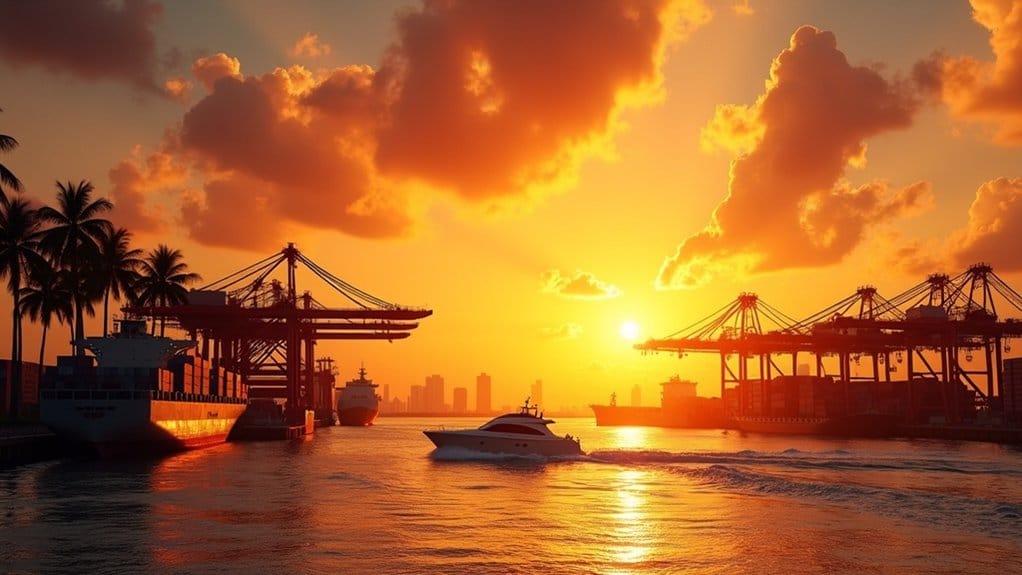
Miami’s designation as the “Port of the Americas” comes from its strategic location as a key maritime gateway linking North America with Caribbean and Latin American markets.
In 2020, the Port of Miami handled over 1.1 million TEUs of containerized cargo, all while being recognized as the busiest cruise port in the world.
This combination of passenger and freight operations has made the port a crucial hub for trade, logistics, and distribution networks in the hemisphere since the mid-20th century.
With such a rich maritime trade heritage, it’s interesting to analyze how these operations have evolved over the years and what they mean for the future of trade in the region.
Gateway to International Commerce
Miami has earned the title of “Port of the Americas” due to its strategic development over the years, establishing itself as a key maritime gateway in the Western Hemisphere.
PortMiami is ideally located at the crossroads of crucial trade routes that link North America, the Caribbean, and Latin America. While tourism plays a significant role in the region’s economy, the port’s influence extends far beyond that; it’s a vital component of international supply chains.
The commercial infrastructure supporting Miami includes several important features:
- World’s Busiest Cruise Port: PortMiami welcomes millions of cruise passengers each year, making it a leader in the cruise industry.
- Deep-Water Terminals: These terminals are equipped to accommodate major international shipping lines, allowing for efficient handling of large vessels.
- Advanced Logistics Networks: Miami has developed sophisticated logistics systems that enable quick cargo processing, which is essential for meeting the demands of global trade.
- Customs Facilities: Refined customs operations facilitate smoother cross-border commerce, reducing delays for businesses.
This comprehensive maritime infrastructure underscores why Miami is often referred to as America’s primary gateway for hemispheric trade.
The economic activity generated by the port is substantial, contributing billions to the local and national economy.
Miami continues to maintain its competitive edge by investing in infrastructure increasements to support its growing role in international commerce.
Strategic Caribbean Trade Position
The Port of Miami has played a crucial role in Caribbean trade since the early 20th century, primarily due to its advantageous geographic location. This positioning allows for logical connectivity between the U.S. and Latin America, making Miami a vital hub for commerce in the region. The port’s well-developed infrastructure facilitates strong trade relationships across multiple countries and markets.
The following table outlines some key trade partners and their primary commodities, as well as the annual volume of trade handled by the Port of Miami:
| Trade Partner | Primary Commodities | Annual Volume |
|---|---|---|
| Caribbean Islands | Consumer goods, machinery | 2.1M TEUs |
| Central America | Electronics, textiles | 1.8M TEUs |
| South America | Agricultural products | 1.5M TEUs |
| Mexico | Automotive parts | 1.3M TEUs |
| Colombia | Coffee, manufactured goods | 0.9M TEUs |
This strategic trade positioning results in an impressive $40 billion in annual cargo value. The Port of Miami is often referred to as the “Port of the Americas” because of its significant role in promoting economic integration throughout the hemisphere. By serving as a major conduit for trade, it not only supports local economies but also strengthens global supply chains.
How Miami’s Nicknames Reflect Its Demographics and Growth
When checking out how a city’s nicknames reflect its identity, Miami’s array of titles offers valuable insights into its demographic and economic development over the past century. One of the earliest and most notable nicknames, “The Magic City,” originated in 1896, marking a pivotal transformation. This title arose when Henry Flagler’s railroad connected Miami to other regions, quickly turning a small settlement of about 300 residents into an incorporated city.
Miami’s growth can be traced through significant milestones that are reflected in its nicknames:
- 1947: The establishment of the “305” area code helped solidify a sense of local identity and community.
- 1970s-1980s: A significant influx of Cuban immigrants during this period greatly increased the Hispanic influence in the city.
- 1990s: As the Hispanic population grew to 70.2%, Miami earned the nickname “Capital of Latin America,” highlighting its role as a cultural and economic hub for Latin American communities.
- 2000s: The term “Sixth Borough” emerged as a nod to the increasing number of New Yorkers relocating to Miami, showcasing the city’s appeal to those seeking new opportunities.
These nicknames not only illustrate Miami’s ongoing transformation from a frontier settlement to a vibrant international center but also emphasize the intersection of cultural diversity and economic growth.
The city is often referred to as the “Port of the Americas,” underscoring its strategic importance in global trade and cultural exchange.
Miami’s Nicknames in Media, Music, and Popular Culture
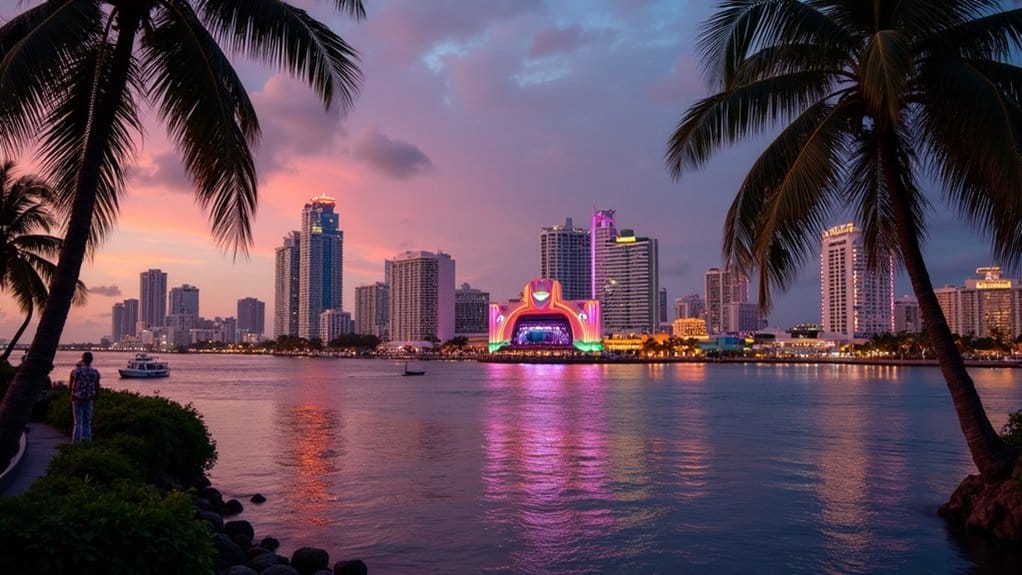
Miami’s nicknames reflect its dynamic identity and cultural significance, shaped significantly by the entertainment industry. “The Magic City” is one such nickname that highlights Miami’s rapid growth and transformation over the years. The area code 305 has become widely recognized in hip-hop and reggaeton music, symbolizing local pride and identity among artists and fans alike.
Additionally, the nickname “Vice City,” which originated in the 1980s, saw a resurgence in popularity thanks to the Grand Theft Auto video game series. This portrayal emphasizes Miami’s vibrant nightlife and complex criminal underbelly, contributing to the city’s reputation in popular media.
Miami is also often referred to as “The Capital of Latin America.” This title acknowledges the city’s significant Latin American influence, particularly in music, film, and visual arts. Such recognition underscores Miami’s role as a cultural hub for Latin communities and artists.
Furthermore, the term “The Sixth Borough” humorously represents the city’s large population of New Yorkers who’ve relocated to Miami. This nickname reflects the blending of cultures and highlights how Miami has become a second home for many.
Other Notable Names and References for Miami
Miami is widely known as “The Magic City,” a title that reflects its rapid growth and vibrant culture. However, the city is also recognized by several other names that highlight its diverse identity and geographic significance. One of these is “Port of the Americas,” a formal designation that emerged in the mid-20th century. This title underscores Miami’s role as a crucial hub for trade and travel, connecting the United States with the Caribbean and Latin America.
In addition to this designation, Miami is often referred to by several other cultural names:
- “The Capital of Latin America” – This reflects Miami’s substantial Hispanic population and the city’s influence on Latin American culture.
- “The 305” – This name is a nod to Miami’s original area code, symbolizing local pride and community identity.
- “The Sixth Borough” – This lighthearted term acknowledges the many New Yorkers who’ve relocated to Miami, contributing to its vibrant and diverse culture.
- “Gateway to the Americas” – This designation emphasizes Miami’s role as a significant point of international connectivity, serving as a bridge between North and South America.
Each of these names provides insight into Miami’s multicultural character and its strategic importance in the region.