

Are you planning to hit up Miami for Spring Break 2026? You’ll want to keep a few key dates in mind to make the most of your trip. March is packed with festivities, but two weekends—March 12-15 and March 19-22—are when things really heat up, and not just in terms of fun. During these peak times, the city ramps up enforcement with DUI checkpoints, traffic restrictions on Ocean Drive starting at 6 PM, and boostd security at beach entrances.
This year, Miami is embracing a new vibe with its “Wake Up to a New March” campaign, shifting the focus from nightlife to wellness and fitness events. Understanding the challenges and changes during these busy weekends can save you from unexpected hassles, like hefty towing fines that can reach $548 or strict beach conduct rules. Keep reading to direct the unique landscape of Miami Spring Break and make the most of your experience!
When Is Miami Spring Break 2026?

Planning your Miami Spring Break trip in March 2026 requires some important insights into the city’s atmosphere and regulations during this busy period.
Miami Spring Break generally encompasses the entire month of March, with peak activity concentrated on two key weekends: March 12-15 and March 19-22.
During these weekends, you can expect heightened law enforcement, including DUI checkpoints on March 13-14 and March 20-21.
Parking regulations will also be stricter citywide, with garage fees ranging from $40 to $100. Additionally, non-residents may face towing fees of up to $548, so it’s wise to plan your parking options in advance.
This year, Miami is also promoting wellness-focused events, such as the Life Time 305 Half Marathon and HYROX.
This shift towards fitness activities provides visitors with alternative ways to enjoy their Spring Break while staying active.
Understanding these details will help you guide Miami during this lively season.
What’s Different About Miami Spring Break This Year?
Miami Beach is undergoing a significant transformation for Spring Break 2026, shifting from its traditional party-centric image to a wellness-oriented experience. The city has launched the “Wake Up to a New March” campaign, highlighting events like the Life Time 305 Half Marathon and the HYROX competition. These initiatives encourage visitors to engage in physical activities rather than nightlife events.
In addition to this new focus on wellness, Miami Beach is implementing stricter regulations to boost safety and control during the Spring Break period. License plate readers will monitor all causeways, and DUI checkpoints will be active during peak weekends, specifically on March 13-14 and 20-21.
Access to the beach will now require passing through security checkpoints that prohibit coolers, glass containers, and tents, confirming a safer environment for all.
Visitors should also be prepared for increased costs. Parking garages may charge between $40 and $100 on busy days, and non-resident towing fees can reach $548. Additionally, package liquor stores in the Art Deco District will close by 8 PM, reflecting the city’s commitment to promoting a healthier, more controlled form of tourism.
This shift in Miami Beach’s Spring Break approach aims to create a more positive and health-conscious experience for both visitors and residents. By focusing on wellness and implementing stricter regulations, the city is looking to redefine what Spring Break means in Miami.
Which Weekends Have the Strictest Enforcement?

Understanding the city’s new wellness initiatives clarifies why certain weekends see increased enforcement. Specifically, you should anticipate the strictest enforcement during two significant weekends: March 12-15 and March 19-22.
| Enforcement Type | March 12-15 | March 19-22 |
|---|---|---|
| Traffic Control | License plate readers on causeways | License plate readers on causeways |
| DUI Checkpoints | Active on March 13-14 | Active on March 20-21 |
| Beach Access | Security checkpoints at Ocean Drive entrances | Security checkpoints at Ocean Drive entrances |
During these weekends, traffic enforcement is notably heightened. Automated license plate readers will be actively monitoring vehicles on the causeways, which can lead to increased traffic stops. DUI checkpoints will operate on Saturday and Sunday nights, so it’s wise to plan your transportation accordingly. Additionally, security personnel will be stationed at the entrances to Ocean Drive, screening beachgoers for compliance.
It’s also important to be aware that non-resident towing fees increase significantly to $548, and parking enforcement will be more rigorous. These measures are in place to confirm public safety and adherence to city regulations, so it’s advisable to take them seriously. By planning ahead and being informed, you can guide these weekends more smoothly.
What Are the New Traffic and DUI Rules?
New Traffic and DUI Rules for Miami Beach
As spring break approaches, it’s essential to be aware of the new traffic and DUI regulations in Miami Beach. These changes are designed to boost safety and manage the heavy influx of visitors during this busy period.
DUI Checkpoints: Expect DUI Checkpoints on March 13-14 and March 20-21. These checkpoints will be strategically placed during times when impaired driving incidents are known to rise. Staying informed about these checkpoints can help you plan your travel and avoid potential legal issues.
Traffic Management: Starting at 6 p.m. on weekends, Traffic Management will be in effect, particularly along Ocean Drive. Access will be limited: you can only enter from the northernmost streets and must exit exclusively at Fifth Street.
This change aims to simplify traffic flow and reduce congestion.
Parking Costs: Be prepared for significant parking fees, with flat rates in parking garages ranging from $40 to $100 on peak days. It’s advisable to plan ahead for parking or consider alternative transportation options.
Towing Fees: If you’re a non-resident, be aware that the towing fee can be as high as $548. It’s crucial to park legally to avoid these hefty charges.
License Plate Readers: From 10 p.m. onwards on March 12-15 and March 19-22, License Plate Readers will be in operation on the causeways. This technology is part of the enforcement measures to assure compliance with the new regulations.
These updates primarily impact areas around South of Fifth and Flamingo Park, where traffic tends to be heavy during spring break weekends.
What Will You Pay for Parking and Towing?

Parking during Miami Spring Break can get pretty pricey. Garage rates usually range from $40 to $100, while street parking costs between $4 and $15 per hour, depending on the area.
If you’re not a registered resident, you’ll need to stay alert and budget accordingly, as you’ll be paying $1 per hour. Keep an eye on the parking signs, too—one violation can lead to a towing fee of $548, along with extra charges.
With enforcement ramping up during peak times, it’s wise to plan ahead and avoid unnecessary expenses.
Speaking of planning, let’s check out some tips to help you guide the Spring Break crowds more effectively.
Flat Rate Garage Fees
Understanding Flat Rate Garage Fees in Miami Beach
During peak spring break weekends, Miami Beach‘s Art Deco District experiences a significant increase in parking demand, leading garage operators to implement flat rate fees. These fees typically range from $40 to $100 per visit. This pricing reflects the area’s appeal, characterized by its vibrant pastel buildings and proximity to the ocean.
To make informed decisions about your parking options, consider these three key factors:
- Location Proximity: Parking facilities near Ocean Drive and Washington Avenue usually charge the highest rates due to their prime location. If you’re looking for convenience, expect to pay a premium.
- Time Flexibility: Arriving early in the morning can help you secure lower rates, often around $40. If your schedule allows, planning to park early can save you money.
- Garage Capacity: The size of the garage can affect pricing. Smaller facilities tend to charge more when they reach full capacity, so it’s wise to check availability in advance.
Flat rate garage fees can alleviate the stress of hourly parking rates, but they do require some strategic planning. By understanding these factors, you’re essentially investing in convenience and a guaranteed parking spot during some of Miami’s busiest weekends.
This is especially important when street parking is limited and the risk of towing increases.
Hourly Street Parking Costs
Understanding Hourly Street Parking Costs in Miami Beach****
When it comes to finding parking in Miami Beach, it’s essential to be aware of the hourly street parking costs, especially during peak seasons like spring break. The city’s parking meters use a tiered pricing system that varies based on location and demand. Prices can range from $4 to $15 per hour, with higher rates typically found along popular areas such as Ocean Drive and Collins Avenue, where beachgoers tend to gather.
For Miami Beach residents, there’s a significant benefit: parking costs just $1 per hour, regardless of demand. This can be a considerable savings for locals compared to non-residents, who need to plan their budget accordingly for longer visits.
It’s also important to be mindful of parking regulations. Improper parking can lead to hefty fines, including a towing fee of $548. During busy times, enforcement is heightened, with officers actively monitoring for expired meters and other violations.
To avoid unexpected costs, it’s best to keep an eye on your parking time and make sure compliance with local regulations.
Non-Resident Towing Charges
Understanding Non-Resident Towing Charges in Miami Beach
Visiting Miami Beach during spring break can be an exciting experience, but it’s important to be aware of the parking regulations to avoid unexpected expenses. If you’re a non-resident and park illegally, you could face a towing fee of $548. This charge can significantly impact your budget, especially during peak season when many visitors are enjoying the festivities.
Miami Beach employs a clear enforcement strategy during spring break to manage the increased number of visitors. Here are the key aspects of their approach:
- Increased Patrol Presence: Law enforcement actively monitors the Art Deco District, making certain compliance with parking regulations throughout the day and night.
- Zero-Tolerance Policy: Authorities strictly enforce rules against expired meters and parking in restricted zones. This approach aims to maintain order in busy areas and assures that all vehicles adhere to local regulations.
- Rapid Response Towing: Non-compliant vehicles are towed quickly, often within minutes of a violation. This swift action serves as a deterrent for illegal parking.
Understanding these enforcement measures can help you avoid costly mistakes. To prevent falling victim to the towing charge, consider legitimate parking options available in the area.
Researching parking garages or designated lots ahead of time can save you money and stress during your visit.
What’s Allowed on Miami Beaches During Spring Break?
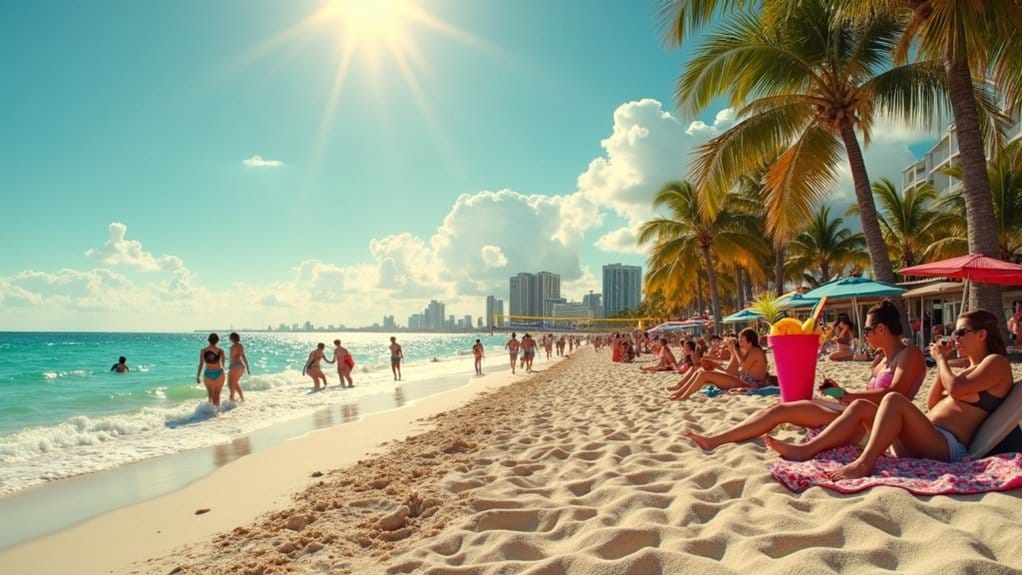
When you arrive at Miami’s beaches during spring break, you’ll notice security checkpoints that screen for items like coolers, glass containers, tents, and amplified music—so it’s best to leave those at home.
The city maintains strict rules against alcohol and smoking on all beaches year-round. These regulations help keep the coastline welcoming for families while allowing for extended hours past 6 PM.
During busy spring break weekends, when liquor stores in the Art Deco District close at 8 PM, these measures become even more significant. This shift reflects Miami Beach’s aim to attract a more mature and mindful crowd.
Now that you know what to expect on the beaches, let’s look into some great activities to enjoy while you’re in the area.
Prohibited Items at Entrances
Understanding Miami’s Beach Entrance Policies
As you prepare for Miami’s Spring Break, it’s essential to familiarize yourself with the city’s entrance policies to avoid any surprises at security checkpoints.
Ocean Drive beach entrances have heightened security during busy weekends to assure safety and uphold community standards.
To confirm a smooth entry, it’s important to know which items are prohibited:
- Coolers and Glass Containers: These aren’t allowed due to safety concerns and their potential to create litter on the beach.
- Tents and Canopies: These items are restricted to prevent overcrowding and to maintain clear sight lines for lifeguards, increasing safety for everyone.
- Amplified Music Equipment: To keep the beach atmosphere enjoyable for all visitors, amplified music devices are banned, helping to minimize noise disturbances.
Security personnel are diligent in enforcing these rules, and non-compliance may result in penalties.
However, you’re welcome to bring essential items like towels and umbrellas.
Alcohol and Smoking Bans
Miami’s year-round bans on alcohol and smoking significantly shape the Spring Break experience, making it quite different from what many expect.
These regulations are strictly enforced along popular areas like Ocean Drive, where security checkpoints prevent anyone from bringing alcohol onto the beach. This includes all forms of smoking, such as cigarettes, cigars, and vaping devices.
If you’re planning to enjoy some off-beach activities, it’s essential to be aware that package liquor stores in the Art Deco District typically close by 8 PM during busy Spring Break weekends.
This means you’ll need to plan accordingly if you want to stock up on supplies.
These restrictions aren’t just guidelines; they’re actively enforced measures aimed at promoting a safer and more controlled environment for visitors during one of Miami’s busiest seasons.
Understanding these rules can help assure a more enjoyable experience while you’re in the area.
Security Checkpoint Requirements
The security checkpoints at beach entrances along Ocean Drive are in place to confirm a safe and enjoyable experience for all visitors. Understanding the specific restrictions can help you prepare for your beach day without any surprises.
Here are the key items you can’t bring to the beach:
- Coolers: No coolers of any size are allowed past the checkpoint. This rule helps maintain a clear and safe environment for everyone.
- Glass Containers: All glass containers are strictly prohibited. This policy is in place to prevent potential injuries on the sand.
- Tents and Amplified Music Equipment: Both tents and any form of amplified music aren’t permitted. This helps keep the beach atmosphere pleasant and manageable for all visitors.
Access to the beach is limited to the northernmost streets, and you must exit at Fifth Street. This refined approach allows security personnel to monitor compliance more effectively and confirms a more organized flow of foot traffic.
Where Can You Drive on Ocean Drive?

Understanding Vehicle Access on Ocean Drive During Spring Break
Guiding Ocean Drive in Miami Beach during spring break requires awareness of specific vehicle access rules. To manage the high volume of visitors, restrictions are in place that limit vehicle entry to the northernmost streets. This creates a one-way traffic flow that ends at Fifth Street, which serves as the only exit point.
| Access Point | Status |
|---|---|
| Northern Street Entrances | Entry Only |
| Fifth Street | Exit Only |
| Mid-Route Entries | Prohibited |
| Causeway Monitoring | License Plate Readers Active |
| Peak Weekend Implementation | March |
During busy weekends in March, authorities use license plate readers on the causeways to monitor vehicles entering the area. This system helps maintain order and safety within the controlled zone. As you approach, be prepared to direct through security checkpoints where coolers and glass containers are not allowed. These measures are in place to assure both traffic flow and beach safety.