
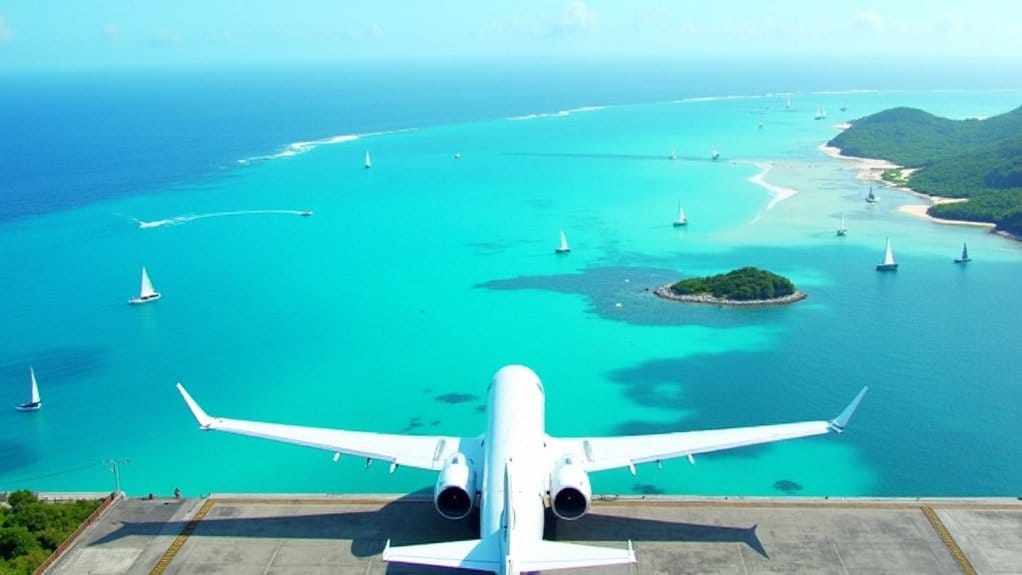
Are you dreaming of the stunning beaches and vibrant culture of St. Barts? If you’re in Miami, you might be wondering how to make that tropical escape a reality. The journey involves a few steps, but it’s all part of the adventure.
First, you’ll need to hop on a flight from Miami to St. Maarten. It’s a common route, but you might be surprised by the next leg of your journey. St. Barts is known for its breathtaking views, but its small airport means you’ll need to catch a quick inter-island flight.
Curious about your options? Whether you’re leaning toward a fast ferry ride or a scenic flight, there are multiple ways to reach this Caribbean gem. Stick around as we check out the best strategies for booking your trip and what each route has to offer. Your island getaway awaits!
Miami to St Maarten: Your Gateway Flight Options
When planning your trip from Miami to St. Maarten, you have several convenient flight options. The journey typically takes about three hours, making it a manageable hop to the Caribbean. American Airlines offers daily nonstop flights, while Delta and JetBlue provide additional seasonal services, giving you a range of choices for your travel needs.
A crucial tip for travelers is to book your flights early. Prices can fluctuate significantly, often ranging from $286 to $576, particularly during peak travel seasons. It’s not uncommon for fares to increase dramatically as departure dates approach, so securing your tickets ahead of time can save you money.
Upon arrival in St. Maarten, you’re just a short 15-minute flight away from St. Barts. Local airlines like Winair and St. Barth Commuter operate these inter-island flights, which typically accommodate small groups of seven to nineteen passengers. This means you can enjoy stunning views from the window as you make your way to your final destination.
Winair vs St Barth Commuter: Booking the St Barts Connection
When planning your trip from St. Maarten to St. Barts, it’s essential to consider the two main carriers: Winair and St Barth Commuter. Understanding their key differences can help you make an informed decision.
Winair operates larger Twin Otter aircraft, which can seat up to 19 passengers. This design offers more legroom and contributes to a smoother ride during the 15-minute flight. If you’re traveling with luggage or simply prefer a bit more space, Winair is a solid choice.
On the other hand, St Barth Commuter uses smaller Cessna 208B Grand Caravans, accommodating just seven passengers. While this setup allows for a more personalized flying experience, it can also mean a bumpier ride due to the smaller size of the aircraft.
When booking your Miami to Sint Maarten ticket, you can reserve your flight on either carrier. It’s wise to book early, especially during peak travel seasons, as seats can fill up quickly.
Last-minute travelers often find themselves scrambling for alternatives, leading to potential delays and stress. By planning ahead, you can secure your preferred departure time and enjoy a smoother travel experience.
Total Travel Time From Miami to St Barts Door-To-Door

When planning your trip from Miami to St. Barts, it’s essential to have a clear understanding of the total travel time involved. While the actual transit time ranges from 4.5 to 7 hours, there are additional factors to consider that can significantly extend your journey.
Start by accounting for at least two hours before your flight departs from Miami. This allows time for check-in, security, and any unforeseen delays.
After your flight, you’ll typically have a layover in San Juan or Sint Maarten, which can last anywhere from 1 to 3 hours, depending on your connection.
Once you arrive in St. Barts, you still have a short flight of about 15 minutes to Gustaf III Airport. Keep in mind that customs processing at Gustavia Harbour can take an additional 30 to 45 minutes, so plan accordingly.
Finally, ground transportation to your accommodation varies based on your location, which also adds to your travel time.
In total, you should realistically expect door-to-door travel from your home in Miami to your destination in St. Barts to take around 8 to 10 hours.
San Juan and Guadeloupe: Alternative Gateway Routes
Travelers often choose Sint Maarten as their primary connection point to St. Barts, but considering San Juan and Guadeloupe as alternative gateways can improve your travel experience.
San Juan, with connections through Tradewind Aviation, offers a highly efficient route. It’s just a three-hour flight from Miami, followed by a quick 15-minute flight over stunning turquoise waters to St. Barts. This option provides flexible scheduling and can potentially save you money when booking through Puerto Rico.
On the other hand, routing through Guadeloupe’s Pointe-à-Pitre allows you to immerse yourself in the French Caribbean atmosphere before reaching St. Barts. Airlines like Air Antilles and St. Barth Commuter offer short inter-island flights that match the convenience of San Juan.
This route not only facilitates your journey but also gives you a taste of authentic Creole culture.
Both San Juan and Guadeloupe accommodate the smaller aircraft necessary for landing at Gustaf III Airport, which is known for its unique runway.
Therefore, whether you choose San Juan or Guadeloupe, you’ll find these alternatives to be practical and enriching options for your travel to St. Barts.
Ferry From St Maarten: When It Makes Sense

When considering travel between St. Maarten and St. Barts, the ferry presents several practical advantages over flying. While a flight might seem quicker, the ferry journey offers a unique scenic experience. In just 45 minutes, you can enjoy stunning views of turquoise waters and picturesque island landscapes that you simply won’t see from a plane at cruising altitude.
Ferries operate hourly from Philipsburg and Marigot to Gustavia, providing flexibility for travelers with varying schedules. This frequency is particularly beneficial if you have late arrivals in St. Maarten; taking a ferry is often more straightforward than trying to make a connecting flight.
Another significant advantage of choosing the ferry is its accommodation for extra gear. Unlike small aircraft that impose strict weight limits, ferries can handle larger luggage and sporting equipment without incurring additional fees. This aspect is particularly valuable for families or travelers bringing along recreational gear.
Reliable ferry services, such as Voyager 3 Dreamliner and Great Bay Ferry, maintain consistent schedules, making island-hopping a smooth and stress-free experience.
Private Charter: Nonstop Miami to St Barts Logistics and Cost
Private charter flights from Miami to St. Barts offer a convenient and efficient travel option for those looking to reach this popular Caribbean destination. These flights take you directly to Gustaf III Airport in approximately 6 hours and 23 minutes, allowing you to skip the common hassles associated with commercial air travel.
| Charter Aspect | Details |
|---|---|
| Cost Range | $21,700 – $37,800 one way |
| Flight Duration | 6 hours 23 minutes |
| Airport Access | 5,000+ U.S. departure points |
With various providers, including evoJets and Caribbean Flights, you can expect a personalized experience that fits your schedule. One of the significant advantages of a private charter is the elimination of lengthy check-in processes and layovers. Instead, you can enjoy a smooth transition from your departure point to St. Barts.
Gustaf III Airport features a 2,100-foot runway, which requires pilots with specialized training. This means you can have confidence in the expertise of the crew managing your flight. While the cost of a private charter may seem high, it reflects the value of direct access, reduced waiting times, and full control over your travel itinerary.
Why There’s No Direct Miami to St Barts Commercial Flight

You won’t find direct commercial flights from Miami to St Barts because Gustaf III Airport has a relatively short runway of just 2,100 feet.
Most commercial jets require at least double that distance for a safe landing. Additionally, the airport’s tricky approach over hills and populated areas means pilots need specialized training, which most commercial airlines don’t provide.
Because of these factors, travelers typically have to connect through San Juan or Sint Maarten before taking a smaller plane for the final leg to St Barts.
Now that we’ve covered the flight situation, let’s take a look at what makes St Barts such a unique destination.
St Barts Runway Limitations
When planning a trip to St. Barts, it’s important to understand the limitations of Gustaf III Airport, which features a 2,100-foot runway. This length restricts the landing of commercial jets, making it accessible only to smaller aircraft such as those operated by St Barth Commuter and Winair.
Most commercial airlines require longer runways to make certain safety protocols are met, which is why you won’t find direct flights from major cities like Miami to St. Barts.
The landing procedures at Gustaf III Airport are unique. Pilots must direct their approach over populated areas and come in close to the beach, a maneuver that requires specialized training.
This is why only experienced pilots from small aircraft operators handle these flights. For first-time visitors, the descent may seem surprising as you fly low over sunbathers before landing. However, these pilots are well-trained to perform these approaches safely and routinely.
As you plan your travel to St. Barts, consider that your journey will typically involve small island-hopper connections. Understanding these runway limitations will help you better prepare for your trip and make certain a smooth travel experience.
Aircraft Size Requirements
Booking a nonstop flight from Miami to St. Barts can be a bit more complicated than it seems due to specific aircraft size requirements at Gustaf III Airport. The airport’s runway measures only 2,100 feet, which poses significant landing challenges that standard commercial jets can’t safely direct.
Here are the key factors influencing your travel options:
- Runway Length: The 2,100-foot runway is insufficient for most commercial aircraft, which typically require at least 5,000 feet for safe landing and takeoff.
- Aircraft Capacity: Only smaller planes that can carry between 7 and 19 passengers are able to operate at this airport. Airlines like Winair use these smaller aircraft for island hopping.
- Pilot Certification: Pilots flying into Gustaf III Airport must undergo specialized training. The airport’s approach involves directing over challenging terrain, including hilltops and beaches, which requires skill and expertise.
- Operational Safety: The surrounding environment includes populated areas and difficult terrain. This necessitates the use of smaller, more maneuverable aircraft to confirm passenger safety.
To reach St. Barts, travelers typically connect through Sint Maarten’s larger airport. Here, specially trained pilots take over, flying the compact planes that can safely land at Gustaf III Airport.
Understanding these aircraft size requirements can help you plan your trip more effectively and make certain a smooth travel experience.
Pilot Training Demands
Landing at Gustaf III Airport requires pilots to possess skills that extend beyond typical commercial aviation qualifications. The unique approach over Malouine Beach, where beachgoers observe aircraft descending just above their heads, necessitates specialized training.
Training Requirements
To make sure pilots are adequately prepared, there are distinct training requirements for operating at this airport compared to standard certifications:
| Training Requirement | Standard Certification | St. Barth Certification |
|---|---|---|
| Runway Length Training | 5,000+ feet | 2,100 feet |
| Approach Complexity | Standard descent | Beach-level approach |
| Special Authorization | Not required | Mandatory |
Pilots need to undergo specific training for shorter runways and complex approaches. The runway at Gustaf III is significantly shorter than those used in standard commercial aviation, which presents additional challenges. Furthermore, the unique beach-level approach requires pilots to be highly skilled and vigilant.
Operational Considerations
Safety regulations play a crucial role in determining which pilots can operate these routes. Many commercial carriers are unable to meet the stringent requirements, leading to higher operational costs and making direct flights from Miami impractical. As a result, travelers are often routed through St. Maarten instead.
Understanding these factors is essential for anyone considering a trip to St. Barth. The specialized training and regulations make certain that only qualified pilots operate in this challenging environment, ultimately prioritizing safety and efficiency.
Arriving at St Barts’ Gustaf III Airport: What to Expect

Arriving at St. Barts’ Gustaf III Airport: What to Expect
When your plane approaches Gustaf III Airport, you’ll quickly appreciate the unique challenges pilots face while landing here. The runway, measuring just 2,100 feet, is nestled between lush hills and a beautiful beach, making your arrival truly memorable.
Here are some important details to keep in mind:
- Daylight Operations Only: Flights to Gustaf III Airport operate solely between 8 am and 6 pm. It’s essential to plan your travel schedule accordingly to avoid any issues.
- Customs Processing: During peak travel seasons, customs and immigration lines can become lengthy. Allow yourself extra time to guide this process, especially if you arrive during busy periods.
- Limited Airport Amenities: Gustaf III Airport is compact and prioritizes efficiency over extensive services. You won’t find a wide array of shops or dining options, so it’s wise to prepare for a straightforward experience.
- Quick Transfer to Gustavia: One of the advantages of arriving at this airport is its proximity to Gustavia. You can reach your accommodation in just 10 minutes, making your transition to vacation mode smooth and hassle-free.
Travel Tips: To boost your travel experience, consider booking flights well in advance, particularly during high season. Additionally, if possible, aim to arrive during off-peak hours to expedite your customs process.
St Barts Entry Requirements: Documentation and Customs
Before traveling to St. Barts, it’s essential to confirm your passport is valid for at least six months beyond your planned arrival date.
As a U.S. citizen, you won’t need a visa for visits up to 90 days since St. Barts is a French overseas collectivity.
Upon your arrival at Gustaf III Airport or Gustavia Harbour, you’ll go through immigration and customs. This process is generally efficient, but having your travel documents readily accessible will help you move through it smoothly.
Be aware that customs regulations allow for limited duty-free items, including alcohol and tobacco, each with specific quantity limits.
It’s also wise to check the current health documentation requirements before your trip, as these can change.
Keeping all your paperwork organized means you’ll direct customs with ease and begin your Caribbean adventure without unnecessary delays.
When to Book and How Much Layover Time You Need

Planning your trip to St. Barts involves a bit of strategy, especially when it comes to booking flights. It’s a good idea to reserve your tickets a few months in advance to avoid those hefty peak-season prices, which can range from around $438 to over $9,500.
Additionally, make sure to allow enough time for your layover at St. Maarten’s airport. A minimum of 90 minutes is recommended for customs and immigration, as those inter-island flights won’t wait for late arrivals.
I’ve found that booking your Miami-to-SXM and onward flights together helps avoid the hassle of sold-out Winair seats during busy periods.
With that in mind, let’s look at some tips for making the most of your time once you arrive.
Best Booking Windows
When planning your St. Barts getaway, understanding the best booking windows is essential for securing the best deals. It’s advisable to book your flight from Miami about 2-3 months in advance, especially during peak travel seasons when prices tend to increase significantly. This approach comes from experience; I’ve seen first-hand how quickly fares can rise as your travel dates approach.
Here’s a straightforward strategy to help you guide the booking process effectively:
- Consistently Monitor Prices: Regularly check fares across various airlines and booking platforms. This allows you to identify trends and make informed decisions.
- Target Off-Peak Travel Months: Aim to travel during off-peak seasons, such as April to May and September to November. These months often offer lower prices, allowing for substantial savings.
- Set Price Alerts: Use technology to your advantage by setting up price alerts. This way, you’ll be notified of any sudden fare drops or special promotions.
- Book Midweek: Research shows that booking flights on Tuesday through Thursday can yield better deals, as airlines often release their best offers during these days.
Planning ahead isn’t just about financial savings; it also provides better flight options and connection times through St. Maarten.
This can improve your overall travel experience, confirming a smoother journey to your destination. By following these strategies, you can make your travel planning more efficient and enjoyable.
Required Layover Timing
When planning your journey to St. Barts, it’s crucial to understand the required layover timing when connecting through San Juan or Sint Maarten. You should allow at least 90 minutes between flights. This timeframe is essential to accommodate customs and immigration processes, which can be unpredictable even under the best circumstances.
To refine your travel experience, consider booking your inter-island connection at the same time as your Miami departure. Small aircraft serving these routes often fill quickly during peak season, and separate bookings can lead to scheduling conflicts.
Your flight from Miami to Sint Maarten typically takes around three hours, followed by a brief 15-minute flight to St. Barts. If you find yourself arriving later than expected, it may be wise to stay overnight in Sint Maarten. This option gives you greater flexibility and helps reduce the stress of tight connections.
Additionally, if you’re traveling during hurricane season, purchasing travel insurance is a prudent choice. Weather-related delays can particularly impact small planes, and customs processing can slow down operations during storms. Having insurance can turn potential shakeions into manageable situations, providing peace of mind during your travels.
Seasonal Price Variations
Understanding seasonal price variations is essential for making informed travel decisions, especially when planning a trip to St. Barts. The price fluctuations can significantly impact your budget, with fares ranging from $2,100 to $9,500 based on your travel dates.
To help you guide these variations effectively, consider the following strategies:
- Travel During Off-Peak Months: The months from May to November are typically less crowded and more affordable. Prices during this period are considerably lower compared to the peak winter season, which can help you save significantly.
- Book Early for High Season: If you plan to travel during the busy winter months, it’s wise to book your Miami-St. Maarten leg as early as possible. Prices can vary greatly, typically falling between $286 and $576, so securing your tickets in advance can lead to substantial savings.
- Stay Informed About Hurricane Season: The hurricane season runs from June to November. While this might seem like a risky time to travel, understanding its implications can provide you with flexibility. Being aware of potential weather shakeions allows you to adjust your plans accordingly.
- Choose Longer Layovers: When connecting through St. Maarten, aim for a minimum of 90-minute layovers. This buffer can help confirm that you don’t miss your inter-island flights, providing a smoother travel experience.