
Are you wondering about Doral and its relationship to Miami? You’re not alone. Many people are curious about this vibrant city that often gets lumped in with its larger neighbor. Understanding Doral’s unique identity is important, especially if you’re considering living or investing in the area.
Doral is its own incorporated city within Miami-Dade County, established in 2003. This means it operates independently, with its own governance and services. However, most addresses still use “Miami, FL,” which can make things a bit confusing. This choice isn’t just for show—there are real advantages to being associated with Miami while enjoying Doral’s distinct benefits.
Situated just 13 miles west of Downtown Miami and a mere five miles from Miami International Airport, Doral stands out for its strategic location. But what does this mean for you? There’s more to discover about how Doral balances its unique status with the allure of Miami. Let’s dive deeper into what makes this city a noteworthy destination.
How Close Is Doral to Downtown Miami?
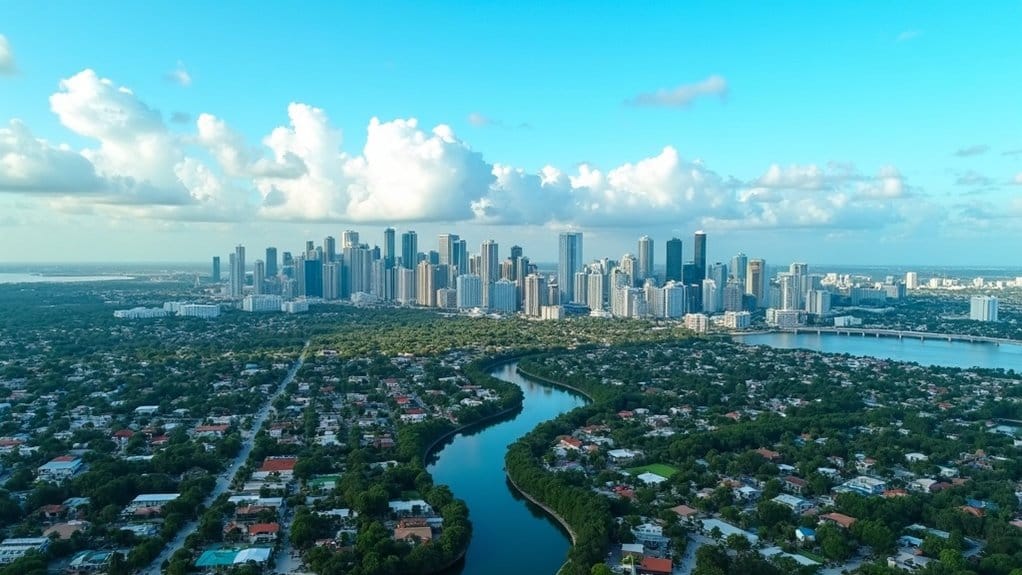
If you’re considering investing in Doral real estate, understanding its proximity to Downtown Miami is essential. Doral is located just 13 miles west of Downtown Miami, which provides a strategic advantage for investors in Miami-Dade County’s commercial corridor.
Typically, the commute to Downtown Miami takes about 20 to 30 minutes via the Dolphin Expressway or Palmetto Expressway, making it a viable option for both professionals and tenants.
Doral is indeed a city within Miami-Dade County, Florida. This location is particularly appealing for investors, as it’s only five miles from Miami International Airport.
Additionally, Doral benefits from robust public transportation options, including Metrobus and Doral Trolley services, assuring direct connectivity to Downtown Miami.
This well-developed transportation infrastructure not only improves accessibility but also strengthens rental demand and property values in the area.
Investors looking for properties that offer a blend of suburban amenities and urban accessibility will find Doral to be a promising option.
Doral Is Its Own City (But Shares Miami’s County)
Doral officially became its own city in 2003, which means it has its own local government while still being part of Miami-Dade County.
This setup gives you the benefit of a city with its own police force and zoning regulations, which can significantly influence property values and development potential.
Understanding how Doral operates independently within the county helps you assess how local policies and infrastructure investments might impact your real estate portfolio differently compared to properties in unincorporated areas of Miami-Dade.
With that in mind, let’s take a closer look at the current real estate market trends in Doral.
Doral’s Incorporation in 2003
When Doral incorporated as an independent city in January 2003, it brought significant changes for both real estate investors and residents. This shift allowed the community to establish a local governance structure that directly addresses the unique needs of its residents. Doral now operates under a mayor-council-manager system, which increases accountability for local services and development decisions.
Key Changes After Incorporation:
| Before 2003 | After Incorporation | Investment Impact |
|---|---|---|
| County-managed services | City-controlled operations | Increased property values |
| Limited local voice | Direct representation | Focused infrastructure investment |
| Generic planning | Community-specific development | Enhanced growth opportunities |
| Slower response times | Efficient local governance | Better business environment |
The transition from an unincorporated area to a self-governing city provided distinct advantages. Investors now benefit from a local government that prioritizes Doral’s 75,874 residents and their specific needs, rather than competing with broader county interests. This localized governance leads to more targeted decision-making, resulting in strategic infrastructure investments and tailored development plans.
For instance, with city control, you can expect quicker responses to community issues and more efficient management of local resources. This environment promotes a welcoming climate for businesses and boosts overall property values, making it a compelling choice for investment.
Miami-Dade County Structure
Doral is an independent city within Miami-Dade County, operating under its own governance while benefiting from the county’s resources. This dual structure is essential for investors to understand, as it influences local investment strategies.
Doral has its own mayor-council-manager government, which allows for local decision-making and tailored municipal services. At the same time, it relies on critical county services such as the Miami-Dade Police Department and Fire Rescue. This unique setup means that while Doral has autonomy, it also enjoys the support of a robust county infrastructure.
The city’s strategic location near Miami International Airport increases its appeal for investment. Additionally, Doral has experienced significant growth, with its population soaring from 3,126 in 1990 to 75,874 in 2020. This increase is indicative of Doral’s attractiveness as a place to live and do business.
Understanding Doral’s governance structure and its relationship with Miami-Dade County is crucial for anyone considering investment in the area. This knowledge helps clarify how local policies can shape business opportunities while influencing the stability of county resources.
Distinct City Government Operations
Doral’s incorporation in January 2003 was a significant step that transformed the area from an unincorporated region into a self-governing municipality. This change established a mayor-council-manager government structure, enabling five elected officials to oversee a budget exceeding $200 million annually. Such autonomy allows for quicker permitting processes and business-friendly policies that can positively influence your investment returns.
Here are some key features of Doral’s government and the benefits they provide:
| Government Feature | Your Benefit |
|---|---|
| Independent Police Department | This improves local security, which can lead to improved property values. |
| Direct Municipal Control | Having local oversight refines development approvals, making it easier to launch commercial ventures. |
| Autonomous Budget Authority | This enables strategic investments in infrastructure, which helps protect your assets and supports community growth. |
Doral’s population grew from 3,126 residents in 1990 to 75,874 in 2020, highlighting the effectiveness of self-governance in attracting investment and creating wealth-building opportunities. By maintaining control over local matters, Doral can respond more swiftly to the needs of its businesses and residents, encourageing a thriving community.
Why Doral Addresses Often Say “Miami, FL”
You might’ve noticed that many Doral addresses include “Miami, FL” in their mailing information. This is due to Miami-Dade County‘s consolidated postal system, which has been in place since before Doral became a city in 2003.
Having a shared mailing area offers practical benefits for property investors and businesses. They get the added prestige of a Miami address while enjoying the advantages of Doral’s lower tax environment.
Plus, using the Miami designation can improve property values and marketing appeal, as real estate listings tap into the strong brand recognition associated with Miami.
Now that we’ve covered the address situation, let’s look into some of the unique features and benefits that Doral has to offer.
Miami-Dade County Postal System
When evaluating real estate opportunities in Doral, it’s important to be aware of a unique aspect of the local postal system: property listings and official documents often use “Miami, FL” as the mailing address instead of “Doral, FL.” This is due to the U.S. Postal Service designating Doral as part of Miami’s broader mail delivery zone.
Even after Doral became an independent municipality in 2003, the USPS chose to keep its existing infrastructure for efficiency.
For real estate investors, this distinction has practical implications. While you’re purchasing property in Doral, with its own zoning regulations and tax structure, any postal correspondence will default to Miami. This can lead to some confusion when reviewing legal documents, tax assessments, and property records, which may reference either name.
Understanding this postal nuance is crucial for conducting thorough due diligence. It’s essential to make certain that you’re aware of how this affects property transactions and communications.
Doral’s unique position within the Miami-Dade County real estate market offers distinct advantages, but being informed about the postal designation is key to guiding the area effectively.
Shared Metropolitan Mailing Area
The United States Postal Service categorizes Doral within Miami’s metropolitan mailing area, a classification that has been in place since before Doral’s incorporation in 2003 and continues today. For property investors in Doral, this means that addresses often appear as “Miami, FL” instead of “Doral, FL.” While this might seem confusing, it’s important to note that this designation is purely administrative and doesn’t affect Doral’s status as an independent city.
Understanding this postal classification can offer a distinct advantage for investors. Doral properties are associated with Miami’s well-known brand, which can be appealing to potential buyers. At the same time, Doral retains its own tax structure and municipal services, making it an attractive option for investment.
This postal overlap is particularly relevant when targeting international buyers. Many are familiar with Miami’s appeal but may not know about the specific investment opportunities in Doral. Since the 1990s, Doral has experienced significant property appreciation, making it a compelling choice for those looking to invest in a growing market.
Business and Branding Benefits
Doral’s Miami mailing address offers more than just postal convenience; it also provides significant branding advantages that can increase your business profile and property values. With over 10,000 businesses in the area, being associated with Miami boosts your market position by offering immediate recognition and credibility.
Proximity to Miami International Airport is a key strategic asset. This location not only signifies geographic convenience but also highlights accessibility for clients and partners, making it easier to establish and maintain business relationships.
Using Miami’s branding can help you influence the region’s extensive transportation networks, which can simplify your logistics and commerce operations.
Doral’s recognition as one of Money magazine’s Best Places to Live in 2018, along with its rich South American culture—particularly the Venezuelan influence—creates a vibrant marketplace. This diverse environment translates into expanded opportunities and increased investment appeal for your business.
How to Get Between Doral and Miami
Getting between Doral and Miami is straightforward, thanks to a variety of transportation options available for residents and investors alike. The two municipalities are just 13 miles apart, making commuting convenient for professionals and property managers.
Here are your primary transportation options:
- Highway Access: The Dolphin Expressway (SR 836) serves as a direct corridor between Doral and Miami, facilitating quick travel throughout the region. This highway is particularly beneficial for those commuting to work or managing properties in either area.
- Free Doral Trolley: The Doral Trolley offers multiple routes that connect key locations at no cost. This service boosts accessibility for residents and adds value for multifamily properties and commercial tenants by making it easier to reach essential services and amenities.
- Rideshare and Public Transit: Services like Uber and Lyft, along with Miami-Dade Transit buses, provide flexible options for getting around. This is especially advantageous for workforce housing residents who may not have personal vehicles.
The robust transportation infrastructure between Doral and Miami significantly improves Doral’s attractiveness as a strategic investment location.
Improved accessibility promotes higher rental demand, particularly for properties aimed at Miami’s workforce. Additionally, this logical connectivity can lead to increased property values and lower vacancy rates, making it an appealing choice for investors seeking reliable returns in a well-connected market.
Understanding these transportation options can help you make informed decisions whether you’re considering a move or investing in this thriving area.
What Makes Doral Different From Miami Culturally
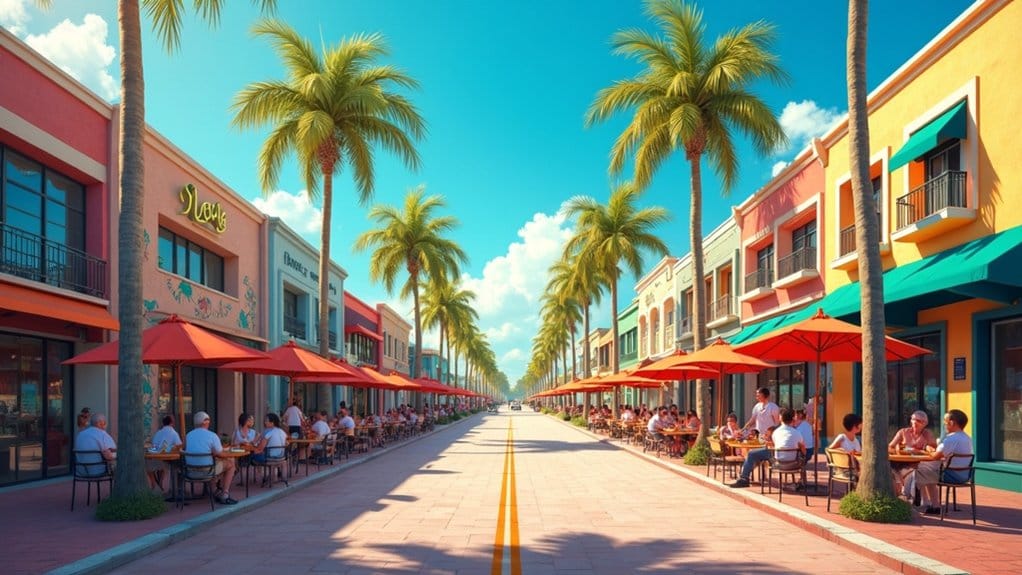
Doral stands apart from Miami primarily due to its strong South American cultural identity, which significantly influences its market dynamics and investment opportunities. While Miami is known for its diverse international population, Doral has developed a unique character shaped largely by its substantial Venezuelan community. This demographic influences local consumer preferences across various sectors, including retail and dining. For instance, restaurants like Pisco y Nazca highlight modern Peruvian cuisine, reflecting the tastes of local residents.
Additionally, Doral strengthens a community-oriented business environment. Spaces like The Doral Yard encourage local entrepreneurship, prioritizing small businesses over larger corporate chains. This focus on local talent is evident in cultural institutions like the Doral Contemporary Art Museum (DORCAM), which emphasizes regional artists and their work, attracting a specific audience that values homegrown creativity.
Additionally, Doral’s infrastructure is designed with families in mind. Parks such as Doral Central Park and Doral Legacy Park improve the quality of life for residents, making the area appealing for family-centered living. This family-oriented approach, combined with its South American cultural focus, sets Doral apart from Miami’s broader, tourism-driven economy.
For investors, Doral presents targeted opportunities, particularly in sectors that cater to South American communities, such as retail, dining, and family-friendly residential properties. Understanding Doral’s unique cultural landscape can provide valuable insights for those looking to guide its investment potential effectively.
Key Differences: Doral’s Business Focus vs Miami’s Urban Energy
Doral’s business landscape offers unique investment opportunities that contrast sharply with Miami’s vibrant urban energy. The city’s cultural identity heavily influences its economic focus, prioritizing corporate efficiency. For example, Doral boasts an impressive sales revenue of $679,634 per employee, highlighting its productivity.
Here are three key factors that set Doral apart as an investment destination:
- Corporate Concentration: Doral is home to major corporate headquarters, such as Carnival Corporation and Ryder. This concentration anchors the commercial real estate market, creating a stable environment for businesses and investors alike.
- Proximity to Miami International Airport: Doral’s location near Miami International Airport boosts its appeal for logistics and distribution investments. This accessibility supports businesses that rely on efficient transportation and connectivity.
- Planned Commercial Districts: Developments like CityPlace Doral showcase a methodical approach to urban planning. Unlike Miami’s organic urban sprawl, Doral’s controlled development creates well-defined commercial spaces, making it attractive for businesses seeking stability.
While Miami thrives on its tourism-driven economy fueled by cultural diversity and a vibrant nightlife, Doral’s suburban density of 5,484.7 residents per square mile promotes stable, family-oriented markets.
Investors must weigh the dynamic volatility of Miami against Doral’s steady growth trajectory. Understanding these differences is crucial for identifying the best investment opportunities in the region.
Should You Stay in Doral or Miami as a Visitor?

When deciding whether to stay in Doral or Miami as a visitor, your choice can significantly influence your overall travel experience.
Doral is conveniently located near Miami International Airport, which can help you save time and money on transfers. This is particularly beneficial for business travelers looking to connect with South American markets, as Doral offers lower accommodation rates compared to Miami’s beachfront hotels.
If you’re interested in golf, the Trump National Doral Miami provides excellent facilities that also serve as networking opportunities. This can be an added advantage for those blending business with leisure.
On the other hand, Miami boasts a vibrant cultural scene and a lively nightlife, though this comes with higher accommodation costs.
If you prefer a more relaxed atmosphere, Doral’s parks, such as Central Park and Legacy Park, offer free recreational options, making it easier for families to enjoy their stay without overspending. Additionally, shopping centers like CityPlace Doral and Miami International Mall provide convenient retail options without the need to venture far.
In summary, if you prioritize business efficiency and a quieter environment while still having easy access to Miami’s attractions, Doral is a suitable choice.
Alternatively, if you seek a more dynamic urban experience with beach access, Miami is the way to go. Your decision should align with your travel goals, confirming a rewarding stay.