Wondering about Miami’s political landscape? You’re not alone. The city often surprises people with its mix of liberal and conservative influences. While Miami leans Democratic—Biden received 53% of the vote in 2020—Miami-Dade County is experiencing a notable shift. In a striking turn, Trump won by 11 points in 2024, a far cry from Clinton’s 29-point win in 2016.
Interestingly, voter registration tells a compelling story: Republicans now slightly outnumber Democrats. This shift highlights the evolving demographics and changing preferences among Hispanic voters. You’ll find liberal areas like Coral Gables and South Beach, but places like Hialeah lean more conservative. What does all this mean for Miami’s identity? Stay tuned to uncover the nuances of this dynamic city.
What Makes a City “Liberal”? The Key Political Indicators
When evaluating whether a city leans liberal, political analysts look at specific indicators that reflect voting patterns and demographic characteristics. One of the most significant metrics is consistent support for Democratic candidates in presidential elections. For instance, Miami’s 53% vote for Biden in 2020 illustrates this trend.
Educational attainment also plays a crucial role; cities where around 35.76% of adults possess a bachelor’s degree often align with progressive policies. This correlation suggests that higher education levels can influence political leanings, as those with advanced education may prioritize social issues.
Demographic diversity is another important factor. Cities with substantial Afro-Caribbean and Hispanic populations frequently advocate for policies like immigration reform and social justice, which are hallmarks of liberal agendas. In Miami, these demographics contribute to the city’s political landscape.
To understand Miami’s political identity, it’s essential to consider younger voters, particularly Millennials and Gen Z. These groups are increasingly active in championing issues such as climate action and LGBTQ+ rights, which can shape the city’s liberal stance.
Additionally, the presence of a significant number of independent voters—33.7% in Miami—indicates a competitive political environment where progressive values can thrive. This complexity highlights the dynamic nature of Miami’s political identity, making it a city where liberal ideas can gain traction amid diverse perspectives.
How Has Miami Voted in Recent Presidential Elections?
Miami-Dade County’s voting patterns in recent presidential elections show a significant shift in political alignment. In 2016, Hillary Clinton won the county by a solid 29 points.
However, by 2020, Joe Biden’s advantage had decreased to just 7 points, indicating a notable movement toward Republican candidates. This trend continued into 2024, when Donald Trump became the first Republican to win Miami-Dade since 1988, securing the county by an 11-point margin.
This change raises interesting questions about the factors influencing voter behavior in the region and how these trends might shape future elections.
2016 Clinton Victory Margin
Miami’s political landscape has undergone significant changes in recent years, reflecting shifting voter sentiments. In 2016, Hillary Clinton won Miami-Dade County by a substantial 29-point margin, which reinforced the area’s reputation as a Democratic stronghold. This strong support for Democratic candidates suggested a solid liberal base in the region.
However, by the 2020 election, Joe Biden‘s victory margin had narrowed to just 7 points, indicating a notable 22-point swing. This shift prompted a reevaluation of the political dynamics in Miami, raising questions about whether the region was leaning more Republican.
The transformation became even more pronounced in 2024 when Donald Trump won Miami-Dade County by an 11-point margin. This marked the first Republican victory in the county since George H.W. Bush in 1988.
A key factor in this shift has been the changing preferences of Cuban and Venezuelan voters, who’ve increasingly leaned toward Republican candidates.
These developments illustrate that Miami is becoming increasingly competitive politically, moving away from its historical identity as a Democratic stronghold. Understanding these trends is essential for anyone looking to grasp the evolving political landscape of Miami.
2020 Biden Narrowing Gap
Examining the 2020 presidential election results in Miami-Dade County reveals a significant shift in voter behavior, particularly among Democratic supporters. Joe Biden’s victory margin of 7 points marked a notable change, as it represented a 22-point drop from Hillary Clinton’s 29-point lead in 2016. This trend indicates a realignment in Florida’s most populous county.
Several factors contributed to this shift:
- Latino Voter Movement: Among Latino voters, particularly Cuban-Americans and Venezuelan-Americans, there was a notable increase in support for Republican candidates. This demographic change reflects evolving political sentiments within these communities.
- Suburban Defection: Middle-class suburban neighborhoods, which have historically leaned Democratic, began to swing toward Republican candidates. This change suggests that economic concerns and local issues may be influencing these voters’ decisions.
- Working-Class Realignment: In certain southwestern areas of the county, blue-collar voters shifted their support, indicating a broader trend of working-class individuals reassessing their political affiliations.
The narrowing gap in Miami-Dade County indicates a significant transformation from a once-reliable Democratic stronghold into a more competitive political landscape.
As voter preferences evolve, traditional voting patterns may no longer serve as accurate predictors of election outcomes. This shift has important implications for Florida’s political dynamics and requires careful consideration by both parties as they strategize for future elections.
2024 Trump Historic Win
The 2024 presidential election marked a significant shift in Miami-Dade County’s political landscape, with Trump winning the county by 11 points. This victory is noteworthy as it represents the first Republican win in this area since George H.W. Bush in 1988. The results highlight a considerable decline in Democratic support compared to previous elections.
Here’s a brief overview of the voting margins in recent election cycles:
| Year | Democratic Margin | Winner |
|---|---|---|
| 2016 | +29 points | Clinton |
| 2020 | Narrow margin | Biden |
| 2024 | -11 points | Trump |
This change indicates a fundamental realignment in voter preferences, particularly among Cuban and Venezuelan communities who have shifted away from leftist policies. Republican registration in Miami-Dade now accounts for 34% of the electorate, with 464,370 registered voters. This marks a significant milestone, as it is the first time Republicans have outnumbered Democrats in the county.
The transformation in Miami-Dade reflects broader trends across Florida, which have been influenced by various factors, including the COVID-19 pandemic. This shift is essential to understand, as it shows how demographic changes and political attitudes can reshape electoral outcomes. Engaging with these shifts can provide insights into the evolving political dynamics not just in Miami-Dade, but throughout the state.
The Republican Voter Registration Surge in Miami-Dade
In Miami-Dade County, we’re seeing a notable shift in voter registrations. Republicans now have 464,370 registrations, which is about 34%, while Democrats have 440,790, or roughly 32.27%.
This marks the first time the GOP has outpaced Democrats in this area. It’s quite a change from 2016, when Hillary Clinton won by a significant margin.
This shift seems to be largely influenced by Republican messaging resonating with Cuban and Venezuelan communities, who relate to concerns about Democratic policies and their ties to the socialist governments they left behind.
As we look further into these trends, it’s important to consider how they might impact future elections and community dynamics.
Historic Registration Flip Explained
For the first time in its modern political history, Miami-Dade County has shifted its voter registration advantage to Republicans. Currently, GOP registrants make up 34% of the electorate, totaling 464,370, while Democrats account for 32.27%, or 440,790. This shift can be attributed to several significant factors.
First, there’s been a noticeable realignment among Cuban and Venezuelan voters. Many from these immigrant communities have moved away from leftist policies they experienced in their home countries, leading to increased support for Republican candidates.
Second, Donald Trump’s performance in the 2020 presidential election played a crucial role. He achieved an 11-point victory margin in Miami-Dade, marking the first time since the 1980s that a Republican presidential candidate won in the county. This victory likely encouraged more residents to register as Republicans.
Lastly, the overall momentum of the Republican Party in Florida has contributed to this change. By 2021, Florida Republicans had established a voter registration advantage of 1.29 million, indicating a robust statewide trend.
This political realignment is driven by concerns over safety, education, and economic growth—issues that resonate with voters across the board.
As demographic changes continue to reshape Florida’s electoral landscape, this shift reflects a departure from traditional party loyalties. Understanding these dynamics is crucial for grasping the evolving political environment in Miami-Dade County and beyond.
Driving Forces Behind Shift
Driving Forces Behind the Shift in Miami-Dade’s Political Landscape****
Miami-Dade County has witnessed a notable shift in Republican voter registration, reflecting a complex interplay of several key factors. Understanding this change involves examining three primary forces.
First, demographic shifts within the Cuban and Venezuelan communities are significant. Many individuals from these groups have experienced the impacts of socialism firsthand in their home countries, leading to a growing opposition to leftist policies. This lived experience has prompted a substantial increase in Republican registration, as these voters seek alternatives that align more closely with their values.
Second, the Republican Party of Florida has implemented effective voter roll maintenance and targeted engagement strategies. These initiatives have resulted in a net gain of over 38,000 voters. By focusing on outreach and connecting with communities, the party has successfully converted dissatisfaction into registered Republican support.
Third, the transformation in Miami-Dade is part of a larger trend across Florida, where Republicans now hold a 1.29 million voter registration advantage statewide. This coordinated political effort illustrates a shift from Miami-Dade being a Democratic stronghold to a county with a Republican plurality, marking a significant change in the electoral landscape.
Collectively, these factors highlight the evolving dynamics of Miami-Dade’s political environment, offering insights into the motivations and strategies behind this shift. Understanding these elements is crucial for anyone looking to grasp the current political climate in the region.
Why Miami City Votes Differently Than Miami-Dade County
Miami City and Miami-Dade County, while geographically connected, exhibit distinct political behaviors, particularly in voting patterns. During the 2020 election, for instance, Joe Biden received 53% of the vote in Miami City, whereas the overall margin in Miami-Dade County was only 7%. This difference can be attributed to several demographic factors that shape the political landscape.
First, educational attainment plays a significant role. In Miami City, about 35.76% of residents hold a bachelor’s degree or higher. This higher level of education is often associated with Democratic-leaning preferences, impacting voting decisions.
Second, the age distribution in Miami City also influences its political climate. Younger generations, particularly Millennials and Gen Z, tend to prioritize issues like climate change and LGBTQ+ rights. Their engagement in these topics often translates into higher voter turnout for progressive candidates.
Finally, the community composition in Miami City is another important factor. The Afro-Caribbean population within the city tends to support social justice initiatives more consistently than voters in the suburban areas of Miami-Dade County, who may have different priorities.
These urban characteristics create a unique political environment in Miami City that contrasts with the broader trends seen in Miami-Dade County. Understanding these factors is essential for grasping why Miami City votes differently and how local demographics shape political outcomes.
Who Miami Elects to Congress and the State Legislature
Miami’s congressional and state legislative representation has seen significant changes since 2020, reflecting the shifting political dynamics in the area. Recently, Republicans have gained ground in positions that were traditionally held by Democrats. This trend began with Trump’s victory in Miami-Dade County in 2020 and accelerated in 2022 when Governor DeSantis won the county by an 11-point margin.
The voter registration statistics illustrate this shift clearly. Republicans now have 464,370 registered voters, surpassing Democrats, who’ve 440,790. This change is largely attributed to growing support among Cuban and Venezuelan communities for Republican candidates.
Despite these shifts, Miami’s state legislature still features a mix of party representation, with some districts narrowly held by Democrats. However, the overall trend indicates a growing Republican influence in both congressional and state representation.
This transformation in Miami’s political landscape underscores a broader realignment that’s shaping how the city is represented at various levels of government. Understanding these changes can provide valuable insights into the evolving nature of political affiliations and voter behavior in Miami.
Where Are Miami’s Liberal and Conservative Pockets Actually?
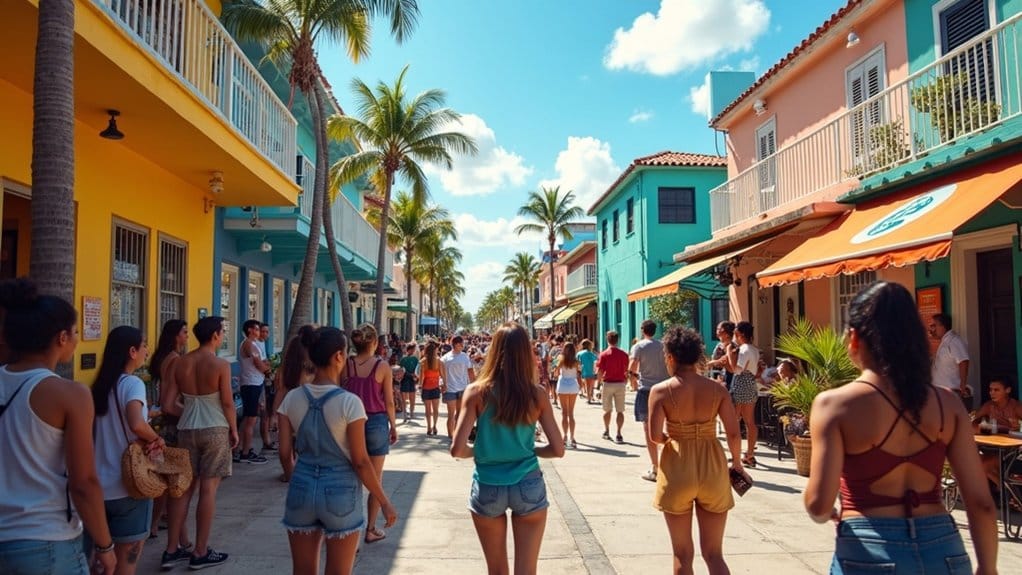
Understanding Miami’s political landscape involves examining specific neighborhoods where distinct ideological clusters have developed. This analysis reveals both liberal strongholds and conservative concentrations, each shaped by demographic factors and regional characteristics.
Liberal Strongholds:
- Coral Gables and South Beach: These neighborhoods consistently show strong support for Democratic candidates. Residents here tend to embrace progressive values, supported by a high level of education—approximately 35.76% hold bachelor’s degrees or higher. This educational attainment often correlates with progressive political beliefs.
- Urban Core Neighborhoods: Areas like Wynwood and Downtown Miami attract younger, educated professionals. This demographic is more inclined to advocate for progressive policies, particularly concerning social issues and environmental sustainability.
- Coastal Communities: Districts along the coastline, such as Miami Beach, typically favor Democratic candidates in both presidential and congressional elections. The appeal of progressive platforms resonates well with the residents in these areas.
Conservative Concentrations:
- Hialeah and Westchester: These neighborhoods are characterized by significant Cuban and Venezuelan populations who increasingly lean toward Republican candidates. This shift is reflected in voter registration statistics, where the GOP holds a 34% advantage over Democrats, who account for 32.27%.
- Suburban Western Corridors: Areas further from the urban center often house older residents, with a median age of around 42.5 years. This demographic tends to prioritize conservative fiscal policies, which influences their voting patterns.
- Working-Class Hispanic Neighborhoods: Economic issues greatly impact political preferences in these areas, leading to stronger support for Republican candidates. Residents often prioritize job security and economic stability, which aligns with conservative platforms.
What Do Miami’s Local Elections Reveal About Its Politics?
Local elections in Miami-Dade County provide valuable insights into the region’s evolving political landscape, which appears to be moving away from its traditional Democratic stronghold. Recent Republican wins in key positions, such as Sheriff and Supervisor of Elections, highlight shifting voter priorities that transcend conventional party affiliations.
Currently, registered Republicans outnumber Democrats, with 464,370 (34%) compared to 440,790 (32.27%). This marks a significant change in the political dynamics of the area.
The recent election data also illustrates a notable shift in voter sentiment. President Biden’s 7-point victory margin in 2020 contrasts sharply with Hillary Clinton’s 29-point lead just four years prior, indicating a 22-point swing in voter preferences.
This shift is particularly evident among Cuban and Venezuelan voters, many of whom have expressed discontent with leftist policies.
Republican candidates have effectively focused on issues such as family values, public safety, and economic growth—topics that resonate with a wide range of voters in the community. As a result, the local election outcomes suggest that Miami-Dade is transitioning into a more competitive battleground rather than remaining a reliably Democratic region.
Understanding these trends is essential for anyone interested in Miami’s political future. The dynamics at play reflect broader national conversations about party identity and voter engagement, making it crucial to stay informed about how these shifts might impact local governance and policy decisions.
Miami’s Unique Demographics: Why Hispanic Voters Shifted Right
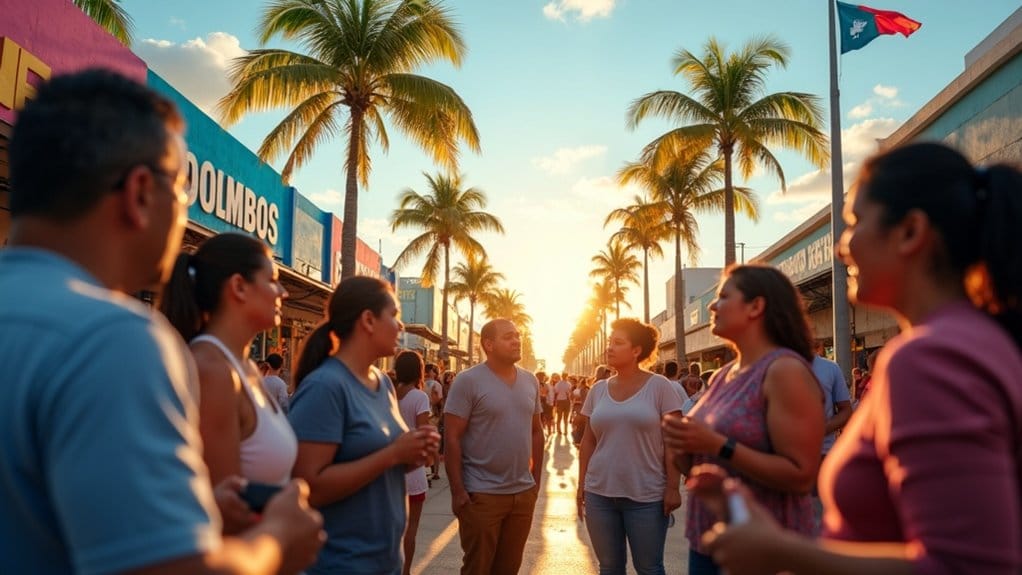
Over the past decade, Hispanic voters in Miami-Dade County have significantly influenced the region’s political landscape, shifting towards the Republican Party in ways that challenge traditional assumptions about Latino voting patterns.
Three key factors contribute to this transformation:
- Anti-Socialist Sentiment: Many Cuban and Venezuelan voters, having experienced leftist regimes firsthand, are particularly sensitive to policies they associate with socialism. This historical context informs their political choices and leads them to favor candidates who advocate for free-market principles.
- Economic Priorities: Republican messaging that emphasizes economic growth and business development resonates strongly with upwardly mobile Hispanic families. For these voters, economic opportunity is often a top priority, and they’re drawn to policies that support entrepreneurship and job creation.
- Cultural Issues: The Republican Party’s focus on education, safety, and family values aligns well with the conservative social beliefs held by many in these communities. Issues such as school choice and public safety are particularly relevant, making Republican candidates appealing to this demographic.
The impact of this shift has been significant. In the 2020 presidential election, Donald Trump won Miami-Dade County, marking the first Republican victory there since 1988.
Currently, registered Republicans outnumber Democrats in the county, indicating a notable political realignment in Florida’s most populous area.
Understanding these dynamics is crucial for comprehending the evolving political landscape in Miami. As Hispanic voters continue to make their voices heard, their preferences and priorities will likely shape political strategies and outcomes in future elections.