
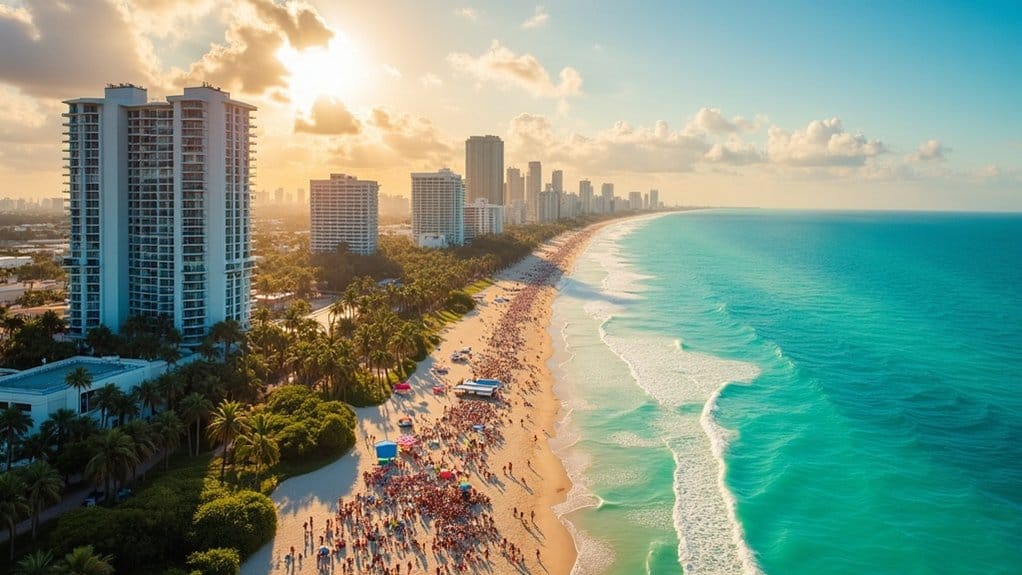
Are you curious about Miami’s potential to host the Olympics? With stunning venues like Hard Rock Stadium and FTX Arena, plus over 50,000 hotel rooms, the city seems ready for the spotlight. However, there are some important factors to consider. Miami’s transit system struggles to accommodate large crowds, and the estimated budget overruns could leave taxpayers facing hefty bills. Additionally, the city’s notorious August heat and hurricane season could pose significant challenges. As we look into whether Miami could be a viable host for the 2036 or 2040 Games, it’s essential to look at these logistical hurdles and their implications. Stay tuned to find out more!
What Does the IOC Demand From Olympic Host Cities?
When considering potential Olympic host cities, the International Olympic Committee (IOC) follows a structured checklist that helps identify strong candidates. This checklist is based on five key pillars essential for a successful bid:
- Transportation Infrastructure: The IOC requires a robust transportation system that can accommodate the significant influx of visitors. Effective public transit and accessibility are crucial for moving athletes and spectators efficiently.
- Sustainability: The IOC emphasizes sustainable practices, promoting the use of existing venues and temporary facilities rather than investing in costly new constructions. This approach not only reduces environmental impact but also aligns with global efforts to prioritize sustainability.
- Financial Planning: Transparent financial strategies are essential. The IOC closely examines budgets, as historical data shows an average budget overrun of 179%. Prospective host cities must demonstrate a realistic financial plan that balances ambition with fiscal responsibility.
- Public Support: Strong community backing is vital. The IOC looks for public approval ratings exceeding 80%. This support reflects the community’s enthusiasm and willingness to engage with the event.
- Legacy Commitments: Host cities need to outline clear commitments to make certain that the benefits of the Olympics extend beyond the event itself. This includes plans for infrastructure improvements and community programs that will have lasting impacts.
By focusing on these pillars, the IOC aims to assure that host cities aren’t only prepared to deliver a world-class Olympic experience but also committed to responsible management and positive community engagement.
This approach helps build a foundation for a successful and sustainable Olympic Games.
Does Miami Have the Venues and Olympic Village Space?
Miami presents a compelling case for hosting the Olympics, particularly due to its existing venues that align with the International Olympic Committee‘s (IOC) requirements. Unlike many cities that have incurred substantial costs for new infrastructure, Miami influences its established facilities.
For instance, Dolphins Stadium is prepared for opening and closing ceremonies, American Airlines Arena is set for basketball events, and BankUnited Center is equipped for volleyball. Additionally, Marlins Park serves as a venue for baseball, and South Beach is an ideal location for beach volleyball, benefiting from natural accessibility. The sailing events can be accommodated in Biscayne Bay, which requires minimal investment.
A significant advantage for Miami is its proposed Olympic Village location. By repurposing existing university campuses, the city can avoid significant construction costs while making certain close proximity to competition sites. This strategic approach not only saves money but also boosts the overall experience for athletes and visitors alike.
Also, Miami’s international airports are expanding, improving global connectivity and addressing transportation needs effectively.
This infrastructure-light strategy aligns well with the IOC’s recent focus on fiscal responsibility and sustainable venues. By using existing resources and minimizing new construction, Miami is well-positioned to meet the demands of hosting the Olympics while also confirming a positive impact on the community and the environment.
Miami’s Public Transit Gap: The Biggest Dealbreaker
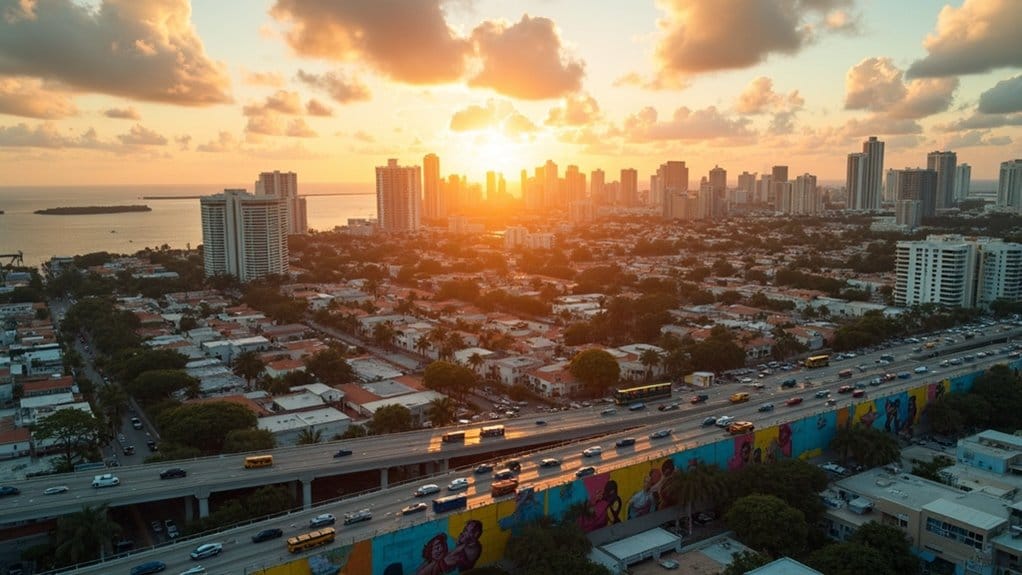
Miami’s Public Transit Gap: A Significant Challenge for the Olympic Bid
Miami’s public transportation system presents a considerable challenge that could impact the city’s bid to host the Olympics. With a metropolitan population of approximately 5.4 million, the number of visitors could double during the Games. However, the current reliance on a single rail line is insufficient to accommodate this increase.
Additionally, the bus network often experiences delays due to chronic traffic congestion and issues with driver signaling. This can create a difficult environment for both spectators and athletes, potentially leading to lengthy wait times and frustrating travel experiences.
Addressing these public transit gaps is essential for increasing visitor experience and assuring satisfaction during the Olympics. Local residents and officials have expressed concerns about whether the existing infrastructure can support the influx of visitors.
The lack of a comprehensive and integrated transportation network isn’t merely an inconvenience; it could significantly affect public support for Miami’s Olympic ambitions.
Ultimately, developing viable transit solutions is crucial. By improving public transportation, Miami can better position itself to host the Games successfully and create a positive experience for everyone involved.
Why Miami’s Super Bowl Success Matters (and Why It Doesn’t)
Miami has a strong history of hosting major sporting events, having welcomed eleven Super Bowls from 1968 to 2020. This experience highlights the city’s proficiency in managing large-scale events that attract global attention, supported by impressive tourism numbers—38 million visitors each year indicate that Miami‘s infrastructure is well-equipped to handle significant influxes of people.
Venues like Hard Rock Stadium and FTX Arena also minimize the need for large capital investments, making Miami an attractive option for future events.
However, it’s important to recognize that the logistics of hosting a Super Bowl differ significantly from those required for the Olympics. Here are some key distinctions:
- Duration: Super Bowls typically span one week, while the Olympics run for 17 days, requiring continuous operations and management.
- Venue Requirements: A Super Bowl primarily uses one main venue, whereas the Olympics necessitate over 30 facilities to accommodate various sports.
- Attendance: Super Bowl events peak at around 150,000 attendees, but the Olympics can draw over 500,000 visitors daily, necessitating more extensive logistical planning.
- Sports Coordination: The Super Bowl focuses on a single sport, while the Olympics involve the simultaneous coordination of 45 or more disciplines.
The International Olympic Committee (IOC) places significant emphasis on the long-term impact of infrastructure and economic transformation. While Miami’s experience with single-day events is notable, it doesn’t necessarily guarantee success for the more complex demands of the Olympic Games.
Can Miami’s Hotels Handle 500,000 Olympic Visitors?
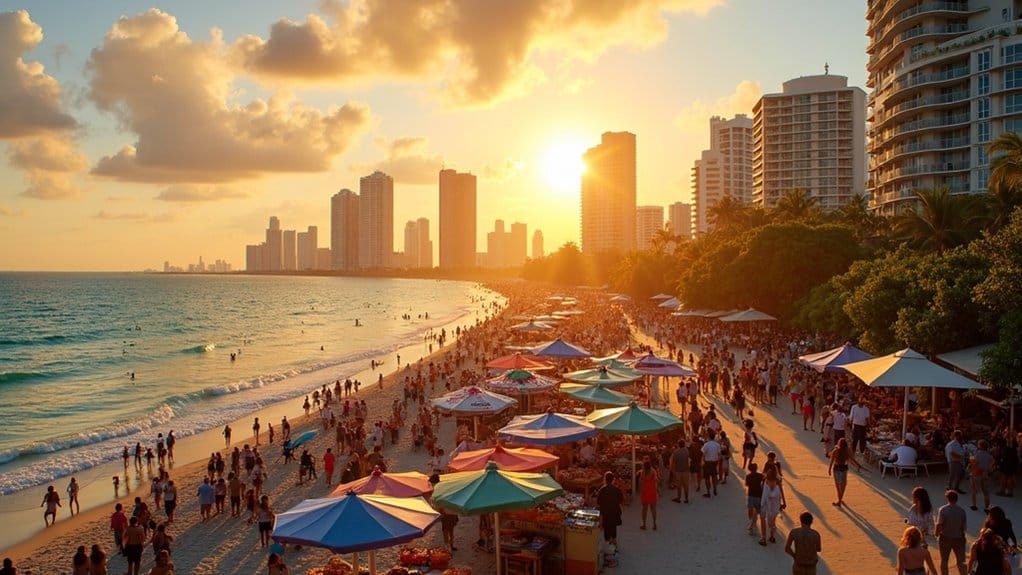
Can Miami’s Hotels Handle 500,000 Olympic Visitors?
Miami is preparing for the possibility of hosting 500,000 Olympic visitors, and understanding its hotel capacity is essential. With over 50,000 hotel rooms available, Miami’s infrastructure forms a solid base. However, the numbers indicate potential challenges. During a typical two-week Olympic period, the city could see approximately 1.4 million additional visitor-days, adding significant pressure to the existing system.
To effectively manage this influx, Miami’s hotel capacity can influence strategic inventory management. The city has a long history of accommodating large events, such as Super Bowls and Art Basel, which demonstrates its ability to scale operations.
Hotels located near Olympic venues in Miami Beach and Downtown will help minimize transportation issues, increasing the overall experience for visitors.
Also, Miami benefits from established partnerships with major hotel chains. These collaborations allow for dynamic pricing and booking flexibility, which can help avert the accommodation shortages often seen in less-prepared host cities.
By optimizing these resources, Miami can’t only support the influx of Olympic visitors but also make sure a positive experience for everyone involved.
How Miami’s August Heat Stacks Up Against Recent Hosts?
Miami’s August climate presents unique challenges for athletes and organizers, particularly when compared to recent Olympic host cities. With average high temperatures reaching 77.3°F and high humidity levels, the heat index can feel significantly higher. This humidity makes Miami distinctly different from drier locations such as Athens or Los Angeles.
Research indicates that humid conditions can be more strenuous for athletes than dry heat. For example, marathon runners may find it difficult to cool down effectively because the thick, humid air limits sweat evaporation. This can lead to increased fatigue and slower performance times.
Outdoor venues in Miami can become extremely uncomfortable for both athletes and spectators. Many attendees often seek shade between events to escape the oppressive heat. Additionally, athletes may experience longer recovery times as their bodies work harder to manage heat stress.
Another critical factor is the timing of the hurricane season, which coincides with August competitions. This overlap introduces potential risks to infrastructure and can impact event logistics, leading to challenges that recent host cities haven’t had to direct.
Furthermore, Miami typically receives around 9 inches of rainfall in August, adding another layer of complexity to event planning. This can lead to logistical issues, such as scheduling delays and venue accessibility.
What Would Miami Olympics Actually Cost Taxpayers?
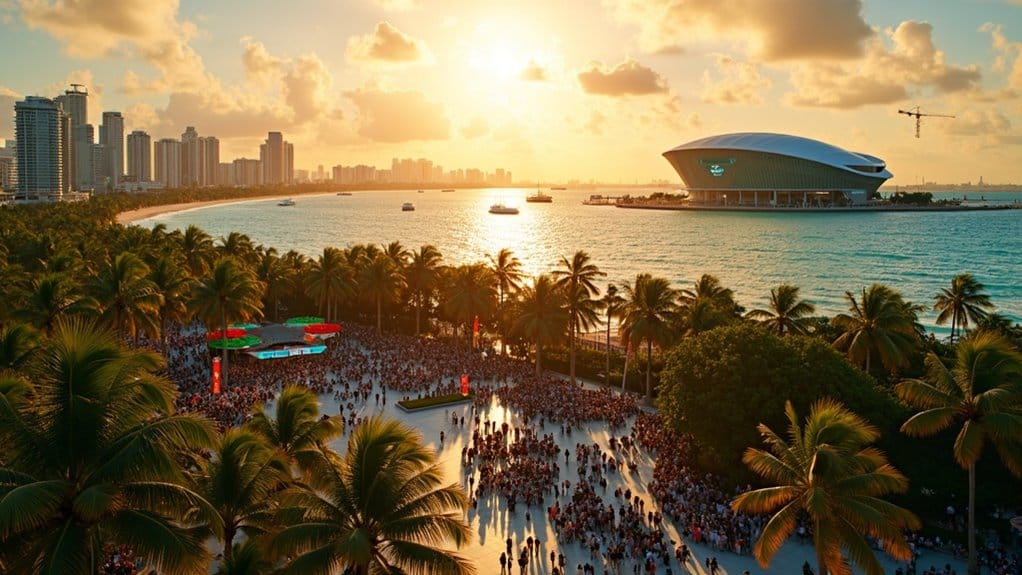
When looking at the costs associated with hosting the Olympics, a concerning trend emerges: cities often exceed their budgets significantly, with an average overshoot of 179%. For instance, London saw its expenses rise from $3.8 billion to $14.5 billion.
Fortunately, Miami has a few advantages, like existing venues such as Hard Rock Stadium and FTX Arena, which could help keep infrastructure spending lower compared to cities that need to build everything from the ground up.
However, it’s important to consider not just the total expenses, but also how much of that burden will fall on taxpayers versus private investments. Given Miami’s recent challenges with municipal finance, there’s a real concern about whether the city can handle any potential cost overruns without resorting to new taxes or bond measures.
This leads us to a broader discussion about the implications of hosting such a massive event and how cities can better prepare for the financial realities that come with it.
Historical Budget Overrun Patterns
Before supporting any Olympic bid, it’s important for taxpayers to recognize a significant trend: host cities often exceed their budgets by an average of 179%. This pattern has been observed consistently across various Olympic games.
For instance, the costs for the London Olympics soared from $3.8 billion to $14.5 billion. Similarly, Rio de Janeiro experienced a 51% cost overrun before the opening ceremonies even began. Such examples highlight a common issue: the complexity of Olympic planning frequently leads to budget forecasts that fall short.
Miami, facing its own challenges with municipal finances, must approach Olympic considerations with heightened financial scrutiny. Here are several critical factors to consider:
- Construction Delays and Cost Overruns: Host cities often grapple with construction challenges, leading to escalating costs as projects race to meet deadlines.
- Economic Impacts: Promises of significant economic benefits can often prove misleading, with cities left to manage long-term debt that stretches for decades.
- Incomplete Infrastructure Projects: In some cases, infrastructure initiatives may be abandoned mid-way through, resulting in unfinished structures and wasted resources.
- Future Tax Implications: Taxpayers may face increased taxes long after the events have concluded, as cities seek to recover financial losses.
Public concern about these issues isn’t unfounded; it reflects a pattern that warrants careful consideration.
Understanding the financial implications of hosting the Olympics can help residents make informed decisions about their community’s future.
Miami’s Existing Infrastructure Advantages
Miami’s existing infrastructure offers significant advantages for a potential Olympic bid. Unlike many cities that need to construct new facilities, Miami already has essential assets in place. With two expanding international airports, Dolphins Stadium, and American Airlines Arena, Miami can reduce capital expenditure significantly, which is a key factor in hosting large-scale events like the Olympics.
Additionally, Miami’s tourism industry demonstrates its capability to manage large crowds. The city welcomes around 38 million visitors annually, which speaks to its operational capacity for handling Olympic-scale events. This existing framework can help minimize the budget overruns that often affect host cities, which have historically averaged a 179% increase in projected costs.
However, while Miami has foundational infrastructure, it’s important to recognize that upgrades will be necessary to meet Olympic standards. The financial stability of the municipal government is also a consideration, as funding improvements can be challenging.
The critical question isn’t just whether the infrastructure is in place, but whether taxpayers will support the investment needed to bridge the gap between current capabilities and the expectations for an Olympic event.
Public Funding vs Revenue
When considering Miami’s potential Olympic bid, it’s important to evaluate the financial implications for taxpayers. Recent patterns from other host cities suggest that the total cost could range from $10 to $15 billion. Given Miami’s recent financial challenges, many residents are understandably concerned about the possibility of cost overruns, which historically average around 179%.
Here are a few key points to consider:
- Infrastructure Costs: Major projects often exceed initial budget estimates. For example, London’s original estimate for its Olympic infrastructure was $3.8 billion, but the final cost soared to $14.5 billion. Such significant increases can strain municipal budgets.
- Budget Overruns: It’s not uncommon for Olympic projects to experience budget overruns. Some cities have reported cost increases of 51% before the opening ceremonies, leading to emergency budget allocations that can shake other financial commitments.
- Long-term Debt: The financial obligations associated with hosting the Olympics can extend well beyond the event itself. Cities often face decades of debt servicing, which can impact future investments in community services.
- Impact on City Services: Funding for essential city services may be diverted to meet Olympic obligations, potentially affecting public safety, education, and infrastructure maintenance.
While the prospect of increased tourism revenue and civic pride is often promoted, financial transparency is crucial. Historical data suggests that these benefits frequently don’t cover the extensive costs involved in hosting the Olympics. Miami’s recent hesitance to publicly fund new stadiums reflects a growing skepticism towards large-scale financial commitments related to such events.
Is 2036 Realistic, or Should Miami Target 2040?
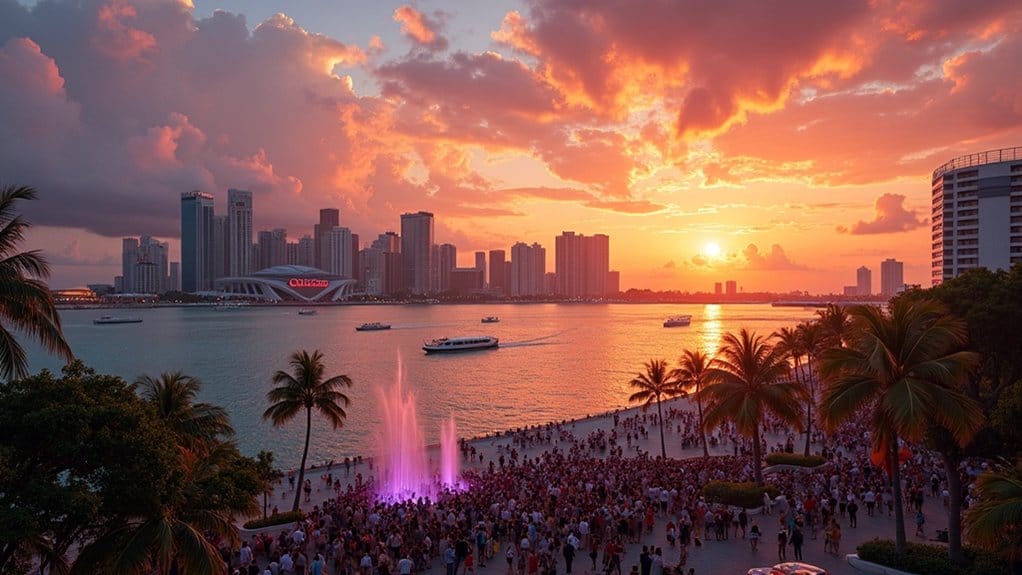
Miami’s pursuit of hosting the Olympics is at a crucial juncture that could significantly influence the outcome of its bid. The decision to target either 2036 or 2040 involves careful consideration of several factors, including infrastructure, financial stability, and climate.
Opting for 2036 presents substantial challenges. The city currently grapples with infrastructure deficiencies and financial instability, making the timeline tight for necessary improvements. Historical data shows that Olympic host cities frequently exceed their budgets—by an average of 179%, as seen in the cases of Rio and London. This budgetary pressure can lead to long-term financial burdens for the host city.
Additionally, Miami’s climate poses concerns. With average August temperatures around 77.3°F and high humidity levels, these conditions could impact athlete performance and crowd attendance. Making sure an optimal experience for both athletes and spectators is essential for a successful Olympic event.
On the other hand, targeting 2040 offers several strategic benefits. This extended timeline allows for anticipated transit expansions and airport improvements, boosting connectivity for visitors.
Also, it provides the opportunity to engage the community more effectively with local sporting venues and initiatives. The additional four years can also facilitate financial stabilization and the necessary infrastructure developments that are vital for a successful Olympic legacy.