
Are you wondering if swimming in Miami during November is a good idea? You’re not alone! Many travelers and locals alike are curious about the ocean conditions as the season changes. Understanding what to expect can make all the difference in planning your beach days. November brings a shift in temperatures, and knowing how this impacts your swim can help you prepare. Plus, being aware of beach safety guidelines and the local weather can improve your experience. Curious to know whether you should pack your swimsuit? Let’s dive in!
Miami Ocean Temperatures in November: Week-by-Week Guide

Miami Ocean Temperatures in November: A Week-by-Week Overview
In early November, Miami’s ocean temperatures are typically around 26°C (79°F). This makes the water very inviting, especially during the first two weeks of the month when swimming conditions are ideal.
Many locals and visitors enjoy extended swimming sessions in these warm waters.
As mid-November approaches, you can expect a gradual drop in temperature to about 24°C (75°F). While this shift is noticeable, the water remains comfortable for swimming.
In fact, many find that a morning swim at this temperature is refreshing and invigorating.
By the final week of November, ocean temperatures typically cool further to around 23°C (73°F). While some swimmers may find this temperature brisk initially, it becomes more manageable once you’re in the water and moving.
If you’re wondering whether you can swim in Miami in November, the answer is yes. It’s advisable to pack a rash guard for those cooler days, which can help keep you comfortable.
The gradual decline in temperature allows for a smooth adjustment throughout the month, and swimming during this time often means fewer crowds, allowing for a more enjoyable experience.
Is 73–79°F Warm Enough? What November Water Feels Like
In November, with water temperatures ranging from 73 to 79°F, you’ll likely find it feels refreshing rather than jarring—kind of like stepping into a heated pool that has cooled off a bit but is still inviting.
During the early part of the month, you can ease in comfortably, while the cooler water later in November might give you a moment to catch your breath before diving in.
Most swimmers get used to the chill pretty quickly, especially when Miami’s sunshine warms you up between dips.
Now, let’s take a closer look at what else November has to offer.
Comfortable for Most Swimmers
Comfortable Water Temperatures for Swimmers in Miami
Miami’s waters in November typically range from 73°F to 79°F. While these temperatures are cooler than the summer months, they remain quite manageable for most swimmers. You’ll likely find that adapting to the water is quick, especially on sunny days when air temperatures are in the low 80s°F.
Here’s a breakdown of how different water temperatures can affect swimmer comfort:
| Water Temperature | Swimmer Comfort Level |
|---|---|
| 79°F (early month) | Generally comfortable for all swimmers |
| 76°F (mid-month) | Quick adjustment period, then very pleasant |
| 73°F (late month) | Refreshing and invigorating, ideal for active swimming |
These temperatures are conducive to various water activities, including snorkeling, paddleboarding, and casual floating. For those coming from colder northern climates, this water may feel pleasantly warm. Staying active in the water is key; movement helps maintain body warmth, making the overall experience enjoyable.
Cooler Than Summer Months
Swimming in Miami’s November Waters
While Miami’s waters in November may not have the same warmth as those in July and August, they offer a unique experience that many swimmers appreciate. The water temperature typically ranges from 73°F to 79°F, providing a refreshing contrast to the summer heat. This cooler climate can increase your overall beach experience in several ways.
- Early Morning Swims: Taking a dip in the morning can be invigorating. The cooler water wakes up your senses without the shock of cold temperatures, making it a pleasant start to your day.
- Midday Comfort: During the afternoon, the sun warms both the air and the water, creating an ideal environment for swimming. Many find that this balance makes for a comfortable and enjoyable swim.
- Extended Activities: The cooler water allows for longer water activities without the risk of overheating. Whether you’re paddleboarding, snorkeling, or simply enjoying a swim, you can do so for extended periods without feeling fatigued.
- Evening Strolls: As the sun begins to set, the warm temperatures—often reaching up to 79°F—encourage spontaneous evening walks along the shore. The mild warmth invites casual wading, making it a perfect time to enjoy the ocean.
Best Miami Beaches for Swimming in November

As November brings milder temperatures to Miami, the city’s beaches become excellent options for swimming, especially for those looking to escape the colder climates of North America.
Miami Beach is a top choice, known for its soft sand and clear waters. It’s perfect for families, offering safe swimming conditions and amenities like lifeguards and restrooms that improve your beach experience.
For a quieter alternative, consider Key Biscayne. The waters here are calm and protected, making it ideal for floating and snorkeling. The stunning surroundings add to the enjoyment, making sure that your swimming experience is both relaxing and memorable.
When planning your beach day, it’s wise to pack reef-safe sunscreen and a light rashguard. While air temperatures typically range from the mid-70s to low 80s°F, sun protection is essential.
Always check the weather forecast before heading out, as November generally provides plenty of sunshine.
In summary, Miami’s beaches in November offer wonderful swimming opportunities, with Miami Beach and Key Biscayne standing out as top picks.
Whether you prefer a lively atmosphere or a more serene setting, there’s a beach to suit your preferences.
Is Hurricane Season Still a Concern in November?
November marks the end of hurricane season, which officially concludes on November 30th. While the Atlantic can still see some storms early in the month, the likelihood of severe weather significantly decreases—most hurricanes usually pass by mid-October.
I experienced this firsthand during my first November beach trip to Miami, where locals mentioned that the skies are generally clear and calm, making it a great time to enjoy the warm ocean waters without the constant worry of weather alerts.
Now that we’ve covered hurricane season, let’s shift our focus to what makes November a great time for a beach getaway.
Hurricane Season Official End
As November arrives, Miami beachgoers can look forward to the end of the official hurricane season on the 30th. This marks a shift toward the drier season, bringing more stable weather conditions.
Impact on Your Beach Plans:
- Decreased Storm Risk: Throughout November, the likelihood of hurricanes drops significantly. Historically, this month sees minimal tropical activity, allowing for more predictable weather.
- Stabilized Weather Patterns: The transition from summer’s unpredictable storms to clearer skies means you can expect more sunny days. This stability is ideal for planning outdoor activities.
- Improved Ocean Conditions: As the month progresses, ocean conditions generally become calmer. This offers better visibility for swimming and watersports, increasing the overall beach experience.
- Easier Planning: With fewer tropical developments to monitor, planning your beach outings becomes more straightforward. While it’s wise to keep an eye on local weather updates, the chances of encountering a hurricane in November are very low.
For example, November 2022 didn’t see any hurricane impacts, allowing many to enjoy pleasant beach conditions.
While it’s always good practice to check local forecasts before heading out, you can generally expect favorable weather for extended beach days during this time.
November Storm Risk Levels
Understanding November Storm Risks
Although hurricane season officially runs through November 30th, the likelihood of significant storm activity in this month is considerably lower.
As November progresses, the Atlantic Ocean experiences a notable decrease in storm activity, largely due to the arrival of cooler air masses.
In November, you can anticipate approximately 7 to 8 days of rain, typically featuring brief afternoon showers rather than severe weather.
Heavy storms that might shake outdoor plans become increasingly rare.
As Thanksgiving approaches, weather conditions stabilize further.
The ocean temperature remains a warm 79°F, making it inviting for swimming, while the threat of severe weather continues to diminish.
Locals often resume their regular beach activities without the heightened concern for storms that’s common in the summer months.
It’s a good idea to pack light rain gear for any unexpected showers, but the minimal storm risks in November shouldn’t hinder your enjoyment of the beach.
Understanding these factors can help you plan accordingly and make the most of your time by the ocean.
Weather Safety Precautions
As November arrives, Miami experiences a significant reduction in hurricane activity. While the official hurricane season ends on November 30th, the likelihood of storms decreases notably during this month.
Here are some essential weather safety precautions for beachgoers to consider:
- Check Morning Forecasts: Before heading to the beach, it’s crucial to check the morning weather forecasts. Miami’s weather can change rapidly, even in calmer months, so staying informed helps confirm a safe outing.
- Download NOAA Weather Apps: Using NOAA weather apps can keep you updated with real-time alerts for unexpected squalls or dangerous surf conditions. Having access to timely information can make a big difference in your safety.
- Observe Warning Flags on Beaches: Familiarize yourself with beach warning flags. A red flag indicates hazardous conditions, while a purple flag signals the presence of marine pests. These indicators are vital for assuring a safe beach experience.
- Be Aware of Lightning Risks: Afternoon showers are common in November, and lightning can pose a serious threat. If you hear thunder, it’s essential to exit the water immediately and seek shelter to avoid potential dangers.
November’s brief rain showers typically last around 20-30 minutes, after which you’ll often enjoy clear skies.
It’s wise to pack a beach umbrella and a light waterproof jacket to stay comfortable. The water temperature usually remains pleasant at around 79°F, making it a great time for swimming.
How to Read Miami Beach Safety Flags Before You Swim
Before you head into the inviting waters of Miami Beach, it’s important to take a moment to check the safety flags at the nearest lifeguard stand. These flags are crucial indicators of ocean conditions and can significantly impact your safety while swimming.
Here’s a breakdown of the flag colors and what they mean:
| Flag Color | Condition | Recommended Action |
|---|---|---|
| Green | Safe swimming | Enjoy the water, but remain aware of your surroundings. |
| Yellow | Moderate hazards | Be cautious and pay attention to changing conditions. |
| Red | Dangerous conditions | Avoid swimming altogether. |
In addition to these flags, a purple flag signals the presence of jellyfish or other stinging marine life. It’s essential to be aware of this, as encounters with jellyfish can be painful.
Conditions at the beach can change rapidly. For instance, I’ve seen flags transition from green to yellow within just a few hours due to shifting winds. This can turn calm waters into choppy ones, making it crucial to always adhere to the current flag warnings.
Even on days marked with a green flag, it’s wise to swim in designated areas supervised by lifeguards. They are there to monitor the conditions and confirm safety. Always check the flags before entering the water, as ocean conditions can fluctuate quickly, similar to Miami’s weather.
Why November Weather Changes Daily in Miami
Understanding November Weather Changes in Miami
If you’ve visited Miami in November, you’ve likely noticed the weather can shift dramatically from morning to evening. For instance, a warm 88°F morning can give way to a cooler 75°F by nightfall. This variability is influenced by several key atmospheric factors:
- Transitional Positioning: Miami lies at the intersection of tropical and subtropical climates. This unique location strengthens interactions between different air masses, resulting in fluctuating weather patterns.
- Ocean Temperature Shifts: The ocean temperatures in November gradually decrease from around 79°F to 73°F. These cooling waters can shake and destabilize local atmospheric conditions, leading to unpredictable weather.
- Variable Wind Patterns: Winds in Miami can vary between 11 mph and 18 mph. This fluctuation can usher in alternating warm and cool fronts, contributing to the daily weather changes.
- High Humidity Levels: Miami’s humidity levels are typically high, which can lead to spontaneous rain showers. These brief downpours can significantly lower temperatures, adding to the overall variability.
Given these factors, it’s wise to pack layers when heading out, especially for beach activities.
The afternoon breezes can be refreshing but also indicate a shift in temperature. With such rapid changes, checking the weather forecast twice daily becomes essential for planning your day.
Understanding these elements can help you guide Miami’s November weather more effectively, making certain you make the most of your time outdoors.
5 Factors to Check Before You Swim in November
5 Factors to Check Before You Swim in November
Before diving into the inviting waters of Miami Beach in November, it’s essential to evaluate the conditions to make sure a safe and enjoyable experience. Here are five key factors to consider:
1. Beach Flags: The Beach Flags are a vital safety indicator. Familiarize yourself with their meanings; a green flag signifies safe swimming conditions, while yellow or red flags indicate caution or danger.
Always take a moment to check these flags before entering the water.
2. Wind Speed: Use your weather app to monitor wind speeds. Winds approaching 18 mph can lead to choppy waves and stronger currents, which may pose a risk for swimmers.
If conditions look rough, it might be best to wait for calmer weather.
3. Water Temperature: In November, the Water Temperature typically ranges from 73 to 79°F. While this range is generally comfortable, it’s important to be aware that cooler water can feel brisk, especially after rainfall.
Know your comfort level before deciding to swim.
4. Rainfall Impact: Miami experiences rainfall about 7-8 days in November. It’s advisable to avoid swimming during or immediately after it rains, as rain can stir up debris and reduce underwater visibility.
Always check the sky before heading out.
5. Ocean Surface Conditions: Observing the ocean’s surface is crucial. A smooth, glassy surface indicates calm waters, making it safer for swimming.
Conversely, if you notice whitecaps, it’s best to exercise caution as this can signal rough conditions.
By considering these factors, you can boost your swimming experience while prioritizing safety.
Staying informed and prepared will make your time in the water enjoyable and secure.
What to Pack for November Swimming in Miami

Packing for November beach days in Miami involves a few key essentials: versatile swimwear that works well both in the water and on the boardwalk, sun protection for those sunny afternoons, and quick-dry items to keep you comfortable if a sudden rain shower hits.
I’ve learned from experience that while the ocean at 79°F is inviting, getting caught in a brief November downpour with just a wet cotton towel isn’t ideal.
Your beach bag should strike a balance between the warm midday sun and cooler mid-60s evenings—so consider lightweight layers that are easy to pack but effective when the temperature changes.
Now, let’s look at some specific items you’ll want to include in your beach bag.
Essential Swimwear and Cover-Ups
Essential Swimwear and Cover-Ups for Miami’s November Beach Scene****
When heading to Miami’s beaches in November, it’s important to choose swimwear that balances comfort and warmth. With water temperatures around 73°F, you’ll want lightweight options that dry quickly, allowing you to transition easily between the beach and other activities.
Your Essential Beach Wardrobe:
- Quick-Dry Swimwear: Opt for bikinis or swim trunks made from moisture-wicking fabrics. These materials not only dry quickly but also keep you comfortable in the water without leaving you cold.
- Breathable Cover-Ups: Look for cover-ups made from cotton or linen. These fabrics offer sun protection while remaining light enough to keep you cool. They’re perfect for walking along the beach or grabbing a bite without feeling overheated.
- Light Evening Layer: As temperatures can dip to the mid-60s after sunset, it’s wise to pack a light sweater or cardigan. This will make sure you stay warm during the cooler evenings without sacrificing style.
- Sun Protection Essentials: Miami’s sun is strong, even in November. Make sure to apply sunscreen regularly, wear polarized sunglasses to protect your eyes, and consider a wide-brimmed hat for additional coverage.
Having spent ample time on Miami’s beaches, I can attest to the importance of respecting the sun’s intensity.
Even during the milder months, taking precautions against UV rays is essential for a safe and enjoyable beach experience.
Sun Protection Must-Haves
Essential Sun Protection for Your Miami Beach Trip
Before heading to Miami’s beaches in November, it’s crucial to equip your beach bag with three key sun protection essentials: broad-spectrum sunscreen, polarized sunglasses, and a wide-brimmed hat.
Start with broad-spectrum sunscreen. Choose a product with at least SPF 30 and apply it generously. Even in November, UV rays can be surprisingly strong, so it’s important to reapply every two hours, especially after enjoying the warm 79°F waters.
Next, invest in polarized sunglasses. These not only shield your eyes from harmful UV rays but also reduce glare from the sand and water. This added protection is essential for maintaining good eye health, especially during prolonged outdoor activities.
A wide-brimmed hat is another important accessory. It provides additional shade for your face, neck, and shoulders, helping to minimize sun exposure during your beach relaxation time.
After swimming, consider a lightweight cover-up for the cooler breezy evenings. This not only offers comfort but also adds an extra layer of sun protection while you’re still damp.
Lastly, keep a reusable water bottle filled. Staying hydrated is vital in Miami’s warm climate, especially when engaging in sun exposure and physical activities.
Regular hydration will help you feel your best throughout your beach day.
Quick-Dry Clothing Options
Quick-Dry Clothing Options for Your Beach Day
When planning a day at the beach, choosing the right quick-dry clothing can significantly improve your comfort and enjoyment. In November, Miami’s waters and beaches offer unique opportunities, and selecting the right materials is key to transitioning smoothly from the ocean to the shore.
Here are some essential quick-dry clothing options to consider:
- Nylon or Polyester Swimwear: Opt for swimwear made from nylon or polyester, which dries quickly after you leave the water. These materials are designed to repel water, allowing you to feel comfortable and dry in no time.
- Lightweight Rash Guards: A lightweight rash guard serves a dual purpose. It provides sun protection while also acting as a stylish cover-up for trips to beachfront cafés. Look for options with UPF ratings for added sun safety.
- Microfiber Towels: A microfiber towel is a practical choice for beachgoers. These towels are compact and absorbent, drying quickly and taking up minimal space in your beach bag. They can absorb several times their weight in water, making them an efficient option for drying off after a swim.
- Water Shoes or Flip-Flops: Protecting your feet from the hot sand is essential. Water shoes or quality flip-flops will keep your feet comfortable and safe, allowing you to walk easily along the beach.
As the sun sets and temperatures dip to the mid-60s, having a breathable sweater or light jacket on hand will assure you stay warm without feeling weighed down.
Choosing the right quick-dry clothing can transform your beach experience, making it easy to enjoy swimming, dining, and leisurely strolls along Ocean Drive. By investing in these smart fabric choices, you can focus on making the most of your beach day.
When Not to Swim: Rough Water and Safety Warnings
When Not to Swim: Rough Water and Safety Warnings
Miami’s waters in November can be inviting due to their warmth, but certain conditions should keep you on shore for your safety.
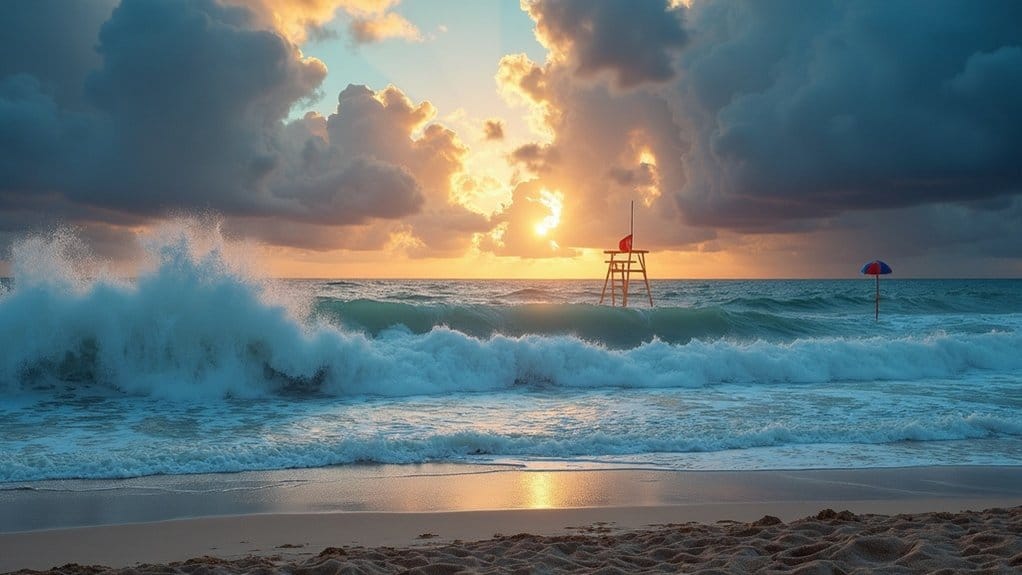
It’s crucial to pay attention to beach flags—when you see red or double-red flags, it indicates that the ocean is too dangerous for swimming. These warnings are issued by lifeguards who are trained to assess the conditions.
After heavy rains, which can occur during the 7-8 rainy days in November, water conditions can change dramatically. Stronger currents and reduced visibility are common after storms, leading to rougher waves and choppy waters.
This is especially true when winds reach 18 mph early in the month.
Visitors sometimes overlook these warning flags, risking their safety by swimming in dangerous conditions. It’s essential to check local advisories before heading to the beach.
If you notice murky brown water following a storm, it’s best to avoid swimming entirely. Remember, the ocean isn’t going anywhere, but your safety should always come first.
Trust the lifeguards—they have extensive knowledge of the local waters and can help you make informed decisions.
Where to Check Live Beach Conditions Before You Go
Where to Check Live Beach Conditions Before You Go
Understanding live beach conditions is essential for a safe and enjoyable day by the water. Before you head out, it’s important to gather reliable information from a variety of sources. Here are some effective ways to check real-time beach conditions:
1. Official Beach Websites and Social Media****: Miami Beach’s official website and social media channels provide live updates on wave height and water clarity. These platforms are frequently updated and are a trusted source for current conditions.
2. Beach Condition Apps: Apps like Surfline and Magicseaweed offer surf reports and safety alerts directly to your smartphone. These apps are user-friendly and can help you make informed decisions based on the latest data.
3. Local Weather Websites: Local weather sites are helpful for checking current water temperatures, which typically average around 79°F in early November and can drop to about 73°F by the end of the month.
Knowing the water temperature can boost your beach experience, whether you’re swimming or simply lounging by the shore.
4. NOAA Marine Forecast: The National Oceanic and Atmospheric Administration (NOAA) provides marine forecasts that include warnings about potentially dangerous conditions. This resource is invaluable for staying safe, especially if you’re planning to engage in water activities.
Additionally, after heavy rain, it’s wise to monitor local news stations for water quality advisories.
These quick checks can be done in just five minutes and can save you from an unpleasant beach experience.